Denture material names like acrylic, PMMA, and cobalt-chromium can leave people confused. Many patients see these words on a treatment plan or read them online and have no idea what they mean.
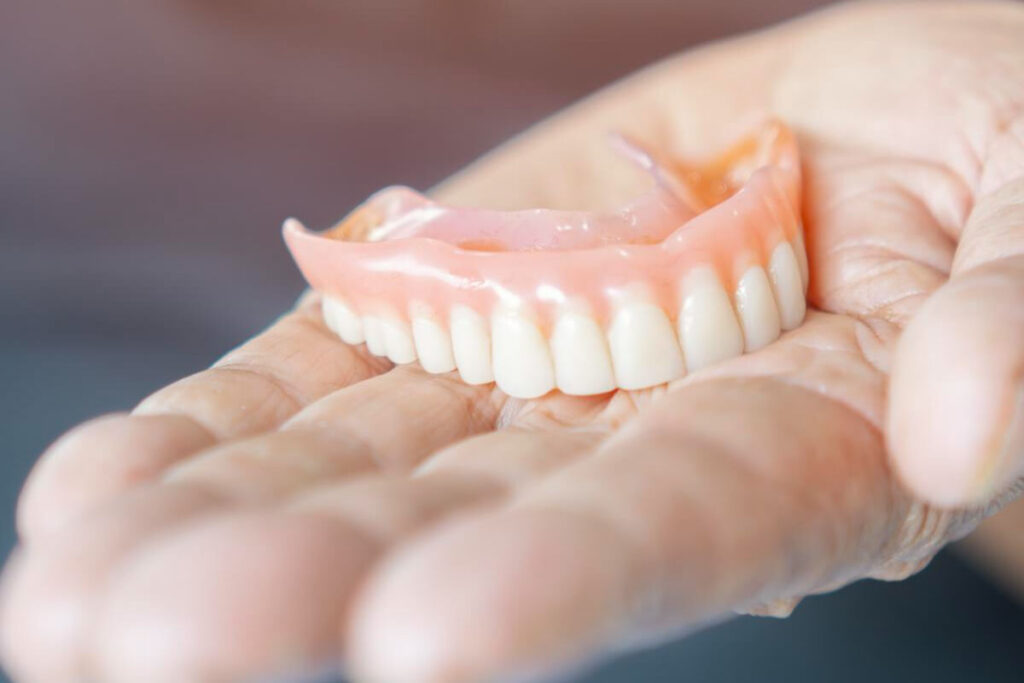
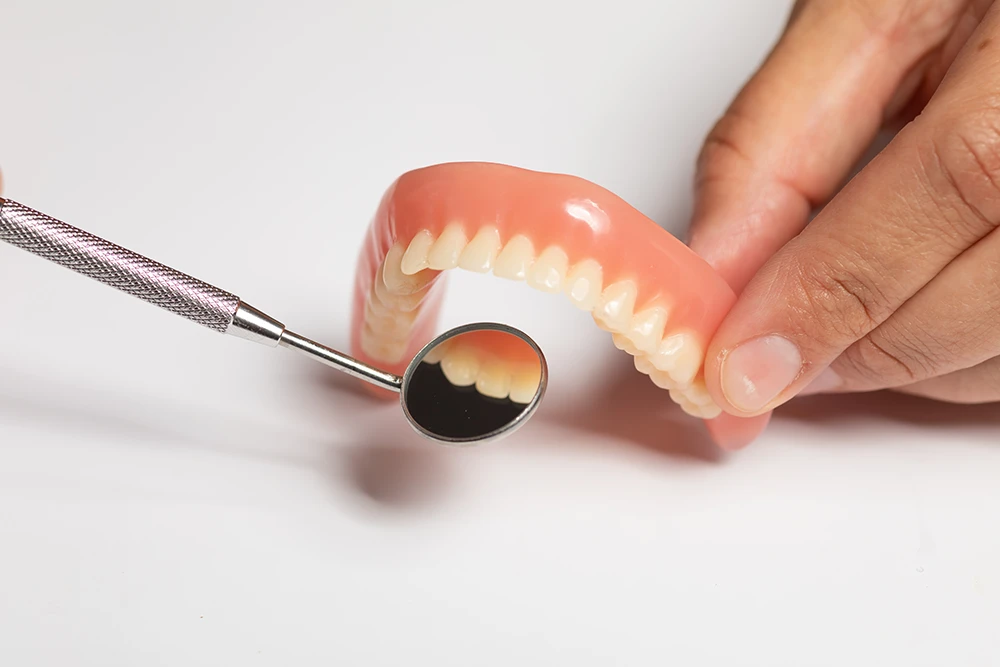
So, what are dentures made of? In a nutshell, a pink base, usually acrylic (also called PMMA), and a set of teeth made from acrylic, porcelain, or composite resin. A partial denture may also use a metal frame, often cobalt-chromium, for extra strength.
In this blog, we break down each material in plain terms and help you match one to your own priorities: cost, how natural it looks, comfort, and how long it needs to last.
Table of Contents
ToggleThe Two Parts of a Denture: Base and Teeth
As briefly mentioned, dentures have two parts, and each part uses its own material. Here is a quick breakdown:
- The base is the pink part that sits against your gums.
- The teeth are the visible part attached to the base.
Dentists pick a different material for each part, since the base must sit against soft gum tissue in comfort, while the teeth must hold up to daily bite force.
Denture Base Materials
The base uses one of three main materials. Each one costs a different amount and feels different in the mouth, so none beats the others in every case. Here is what dentures are made of:
Acrylic (PMMA)
The pink base of most dentures comes from a plastic resin called acrylic, or PMMA for short. It is popular for three plain reasons:
- A lab can tint it to match your gum color.
- It stays light in the mouth all day.
- A lab can shape it to fit your gums closely.
A lab mixes a powder and a liquid into a soft paste, packs it into a mold shaped from an impression of your mouth, then heats it into a solid base.
Acrylic takes in small amounts of moisture over time, one reason a denture needs an adjustment after some years. Some bases mix in tiny glass fibers for extra crack resistance, useful if you have broken a denture before (Knox Valley Dental).
Metal Frameworks (Cobalt-Chromium or Titanium)
Partial denture materials usually include a thin metal frame under the acrylic or teeth for extra strength in a thin shape. Cobalt-chromium is the standard metal choice, strong and budget-friendly. Titanium costs more but weighs less and suits people with a known metal sensitivity, with a close, comfortable fit against the gums.
Zirconia
Zirconia is a hard, tooth-colored ceramic. Dentists use zirconia dentures mostly with dental implants for permanent dentures. It holds up well under daily bite force, resists stains, and looks natural, since light passes through it much like real enamel. Zirconia is not a common choice for a standard removable denture.
Flexible (Nylon) Dentures
A flexible denture uses a soft, bendable plastic called nylon instead of rigid acrylic. This option often suits sensitive gums or a known acrylic sensitivity, and its flexible fit can feel more comfortable for some patients. It is not a stand-in for acrylic in every case, since it fits and bonds in its own way.
Denture Teeth Materials
The visible teeth use one of three main types of denture materials. Here is what dentures are made of:
Acrylic (Resin) Teeth
Acrylic dentures remain the most common choice because Acrylic:
- Wears and chips a bit more easily than porcelain over many years of bite force.
- Bonds well to an acrylic base, since both pieces share the same resin, so the teeth rarely come loose.
- It is soft, so it takes on more of your bite force and sends less force into your gums and jawbone.
- Its slightly textured surface can hold more plaque, so brush it well and often.
- Can pick up stains from coffee, tea, or tobacco over the years.
- Costs the least of the three options.
Porcelain Teeth
Porcelain dentures suit patients who put looks and strength high on their list. Porcelain:
- Grips the base through a mechanical fit rather than a chemical bond, so it can loosen a bit more often than acrylic.
- It is very hard and holds its shape well for many years.
- It is harder, so it sends more bite force into your gums and jawbone, a point worth a quick chat with your dentist rather than a reason to avoid it.
- Its smooth, hard surface resists plaque better than acrylic.
- It resists stains well and keeps its color over time.
- It usually costs the most of the three options.
Composite Resin Teeth
Composite resin sits in the middle on most of these points:
- It sits between acrylic and porcelain for wear: it absorbs shock well and chips less than porcelain, but wears faster than porcelain over many years.
- It bonds to the base with a chemical bond, much like acrylic.
- It sends less force into the jawbone than porcelain, similar to acrylic.
- It holds a moderate amount of plaque, less than acrylic and more than porcelain.
- It resists stains better than acrylic but not as well as porcelain.
- It sits between acrylic and porcelain in price.
The table below lines up cost and lifespan by material:
|
Material |
Approx. cost per arch |
Typical lifespan |
|
Acrylic |
$300 to $1,500 |
5 to 8 years before a reline or remake |
|
Porcelain teeth |
$1,000 to $3,000 |
Base needs a remake in 5 to 10 years; the teeth can last 20 years or more on a new base |
|
Flexible (nylon) |
$700 to $2,500 |
5 to 7 years |
|
Metal frame (partial) |
$1,500 to $3,500 |
7 to 15 years or more |
|
Composite resin teeth |
$800 to $2,000 |
7 to 10 years |
These are general ranges. Costs vary by material, lab, and how much of the denture it covers, so your dentist can give you an exact number at your consultation.


How to Choose the Right Denture Material for You
There is no single best denture material for everyone. The best material for dentures, and the best material for full dentures, depends on what matters most to you.
If Cost Matters Most
Acrylic costs less for both the base and the teeth. Composite resin sits in the middle. Porcelain, metal frames, and implant-supported options such as zirconia cost the most.
If a Natural Look Matters Most
Porcelain looks the most natural, since light passes through it close to the way it passes through real enamel. Zirconia gives a similar look for implant-supported dentures.
If Comfort or a Known Sensitivity Matters Most
A flexible nylon base can suit sensitive gums. Titanium suits a known metal sensitivity, especially a confirmed nickel allergy, since nickel is the most common trigger behind a reaction to a cobalt-chromium frame (Lemont Dental Clinic).
If Long-Term Durability Matters Most
Porcelain teeth and metal frames tend to hold up longest under daily bite force. Ask your dentist how these materials fit your own bite and jaw health.
Denture Material Allergies and Sensitivities
An allergic reaction to a denture material can happen, but it is not common. A small share of denture wearers react to leftover monomer in an acrylic base, most often as gum redness or soreness (dental allergy research). Your dentist can run a patch test to check for this before a lab makes your denture.
A metal sensitivity can also happen, most often as a reaction to nickel inside a cobalt-chromium frame (Lemont Dental Clinic). Tell your dentist if you have a known nickel allergy; a titanium frame or an acrylic-based partial can avoid this risk.
How Denture Material Affects Durability, Comfort, and Your Gums
A denture wears out in two ways: the base and fit, and the teeth themselves, and they wear at different rates. That is why lifespan numbers online do not always agree.
Your gums and jawbone change shape over time, so most bases need a reline or remake every five to ten years, no matter which teeth sit on top (Cleveland Clinic; Knox Valley Dental). Porcelain teeth are harder and can outlast the base, sometimes past twenty years, if moved onto a new base at remake time (Lemont Dental Clinic).
Bite force matters too. Porcelain sends more force into your gums and jawbone than acrylic or composite resin, a point worth raising with your dentist rather than a reason to avoid it.
The Right Material Choice Comes Down to You
So, what are dentures made of? A base of acrylic, metal, or zirconia, and teeth of acrylic, porcelain, or composite resin, with the right mix set by your budget, look, comfort, and how long you need it to last.
Kirkland Dental Excellence offers full and partial dentures and snap-on dentures, and Dr. Hedayati helps you pick the material that fits your case rather than the same option for every patient. Call us at (425) 827-2003 to book a consultation and go over your choices.
FAQs
“Permanent” usually means an implant-supported denture with a titanium or zirconia frame and acrylic or porcelain teeth on top.
Most partial-denture frames use cobalt-chromium. Titanium is a lighter option for a known metal sensitivity, especially a nickel allergy.
A denture has two parts: a base, usually acrylic or a metal frame for a partial, and teeth, made from acrylic, porcelain, or composite resin.
No single material wins for everyone. Porcelain looks the most natural and holds up well. Acrylic costs less and bonds more reliably. The right pick depends on your budget, look, and comfort needs.
Most acrylic dentures need a reline or remake every five to eight years. Porcelain teeth can last twenty years or more on a new base. Metal partial frames often hold up seven to fifteen years or more.
Acrylic costs the least, composite resin and flexible materials sit in the middle, and porcelain, metal, and implant-supported options cost the most.
Almost always acrylic resin, since a lab can shape and color it to match natural gum tissue.
It can, for a short adjustment period while your tongue and cheeks relearn the new shape. This settles within a few weeks for most people.