

Updated: 04/26/2026
You might think about getting an MRI but are worried if your dental implant will cause problems. This is a common concern. But no worries! You can safely get an MRI with dental implants. Modern titanium implants are MRI-compatible and non-magnetic. They may cause minor image artifacts (distortions) but won’t heat up, move, or cause harm.
Join Kirkland Dental Excellence in Kirkland, WA (rated 4.8 stars on Google) to learn more about dental implants, MRI, and how you should prepare for it.
Table of Contents
ToggleDo Dental Implants Interfere with MRI?
Modern titanium and zirconia implants don’t interfere with MRI scans. They may create small artifacts, which are dark spots or signal voids on the images.
These artifacts appear as distortions around the implant site, usually 2-5mm in size. They rarely affect diagnosis unless the scan focuses directly on your jaw or teeth.
The MRI machine uses powerful magnets to create images. Non-magnetic materials like titanium don’t disrupt this process significantly. Radiologists can adjust scan settings to minimize any interference.
Is It Safe to Have an MRI with Dental Implants?
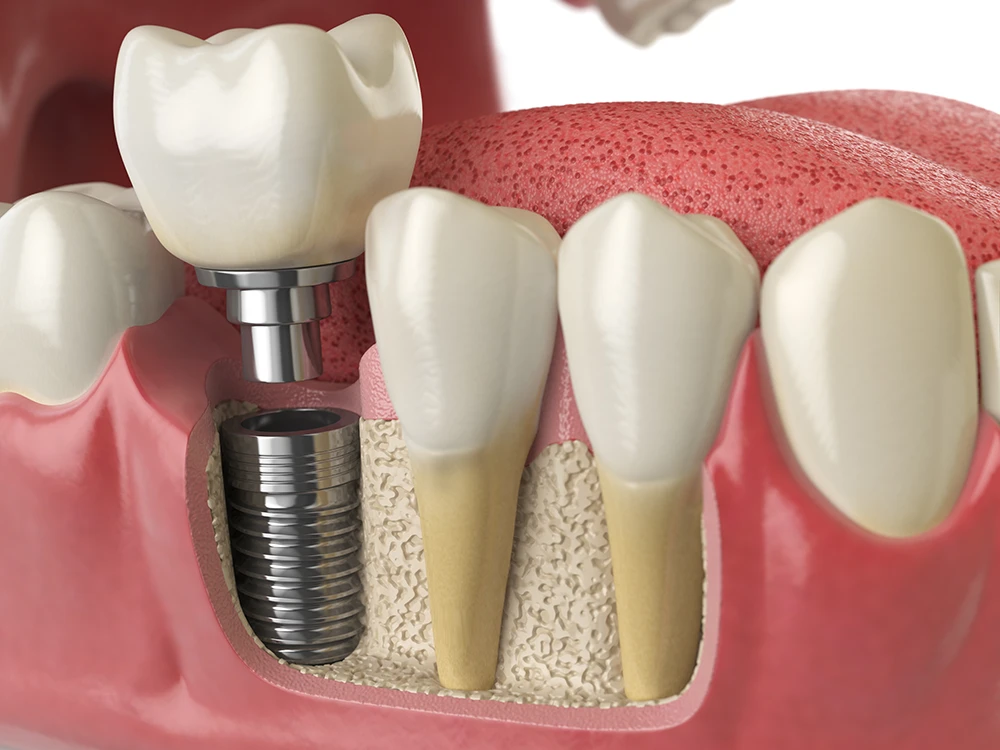
Yes, MRI with dental implants is completely safe. Most dental implants today use titanium or zirconia. Both materials are non-magnetic. They also don’t heat up, move, or cause discomfort during scans.
- Titanium is the most common material. It’s biocompatible, durable, and doesn’t react to magnetic fields. Over 95% of modern implants use pure titanium or titanium alloy.
- Zirconia implants are metal-free ceramic alternatives. They’re completely non-magnetic and cause even fewer MRI artifacts than titanium.
The FDA classifies titanium dental implants as MRI-safe for scans up to 3 Tesla. This is the standard strength for most medical MRIs.
Unlike ferromagnetic metals, titanium doesn’t conduct heat during MRI. There’s no risk of burns or tissue damage. Your implant will stay firmly in place throughout the scan.
Over 99% of patients with modern dental implants experience no complications during MRI scans.



What Implants Are Not Safe for MRI?
- Some older implant materials can cause problems during MRI scans. These include stainless steel, cobalt-chromium alloys, and nickel-based materials.
- Ferromagnetic metals can heat up during MRI, potentially causing tissue burns. They may also shift position or create severe image distortions that make diagnosis difficult.
- Magnetic attachments used with dentures or overdentures are not MRI-safe. These must be removed before scanning.
These older implant types are rare. Most dental implants in Kirkland placed after 2000 use titanium or zirconia. If you’re unsure about your implant material, contact your Kirkland dentist before scheduling an MRI.
Can You Have a Head MRI with Dental Implants?
Yes, head MRI with dental implants is safe. Titanium implants may create artifacts near your jaw or sinuses, but these don’t prevent accurate diagnosis.
Radiologists can use artifact-reduction techniques to improve image quality. They may adjust the scan angle or use specialized sequences like spin-echo imaging.
If artifacts are severe, your doctor may recommend a CT scan instead. CT scans use X-rays rather than magnets, so metal doesn’t cause distortions.
Understanding MRI Artifacts from Dental Work
MRI artifacts are visual distortions caused by metal disrupting the magnetic field. They appear as black areas or signal voids on scan images.
- Titanium creates minimal artifacts because it’s weakly paramagnetic. The distortions are localized and usually don’t affect areas beyond the immediate implant site.
- Ferromagnetic materials create larger, more severe artifacts. These can obscure surrounding tissues and make diagnosis challenging.
Your radiologist knows how to work around these artifacts. They can adjust scan parameters or use different imaging sequences to get clear results.
Can MRI Be Done with Dental Crowns?
Yes, most dental crowns are MRI-safe. The safety depends on the crown material.
- Porcelain and ceramic crowns contain no metal. They’re completely MRI-compatible and cause no artifacts.
- Porcelain-fused-to-metal (PFM) crowns have a thin metal substructure, often nickel-chromium or gold. These may cause minor artifacts but are generally safe.
- Full metal crowns may warm slightly during long MRI scans, but this is rare and usually not noticeable. Always inform your MRI technician about any metal dental work.


Can I Have an MRI with a Dental Bridge?
Yes, you can have an MRI with dental implants and dental bridges. Traditional bridges use metal frameworks that may cause small artifacts. On the other hand, Maryland bridges use minimal metal and cause fewer distortions. They’re bonded with resin and have less metal content than traditional bridges.
The artifacts from bridges rarely affect diagnosis unless the scan focuses on your mouth or jaw area.
How to Prepare for a Head MRI with Dental Implants
- Inform your MRI technician about your implants, including material and placement date
- Bring implant documentation if available (implant card from your Kirkland dentist)
- Remove all metal accessories like jewelry, glasses, and hairpins
- Remove dentures with metal clasps or magnetic attachments
- Wear metal-free clothing without zippers, underwire bras, or metal buttons
- Ask about artifact-reduction techniques if your scan focuses on the head or jaw
- Stay still during the scan to prevent image blurring
MRI with Dental Implants: Precautions and Recommendations
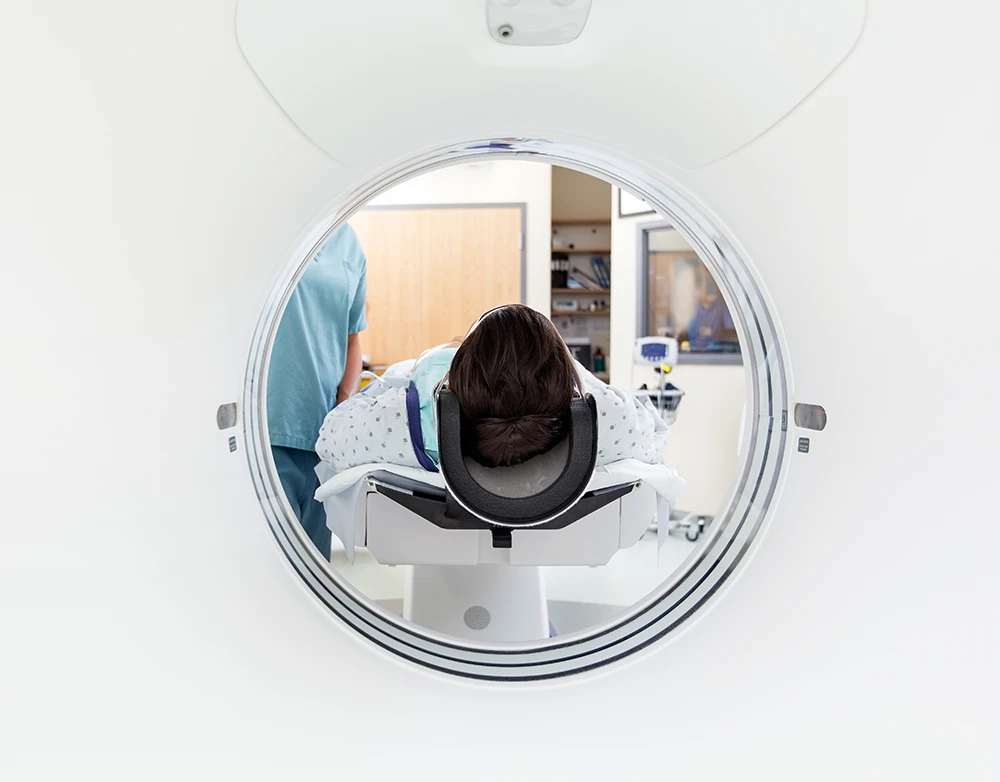
If you have dental implants, taking the right steps ensures a safe and effective MRI. Below are some precautions and recommendations for a smooth process:
- Provide all implant details when scheduling your MRI to avoid delays or complications.
- Avoid zippers, underwire bras, or anything with metallic components during the scan.
- Drink plenty of water before and after the scan to help flush out any contrast material.
- If your implants cause significant image distortion, consider other imaging options like CT scans.
MRI machines can be loud, so ask for earplugs or noise-canceling headphones to stay comfortable.
Are There Any Risks Associated with MRI Scans and Dental Implant Patients?
The risks of getting an MRI with dental implants are extremely minimal with modern titanium or zirconia implants.
- Heating is not a concern with non-ferromagnetic materials. Titanium doesn’t conduct heat during MRI scans.
- Implant movement is virtually impossible. Properly integrated titanium implants are firmly fused to your jawbone.
- Image artifacts are the only real consideration. These are minor distortions that rarely affect diagnosis.
In extremely rare cases with strong magnetic fields above 3 Tesla, poorly integrated implants may experience micro-movements. This is exceptionally uncommon.
CT Scan vs. MRI for Dental Implant Patients
|
Feature |
CT Scan |
MRI |
|
Effect of metal implants |
No artifacts — metal doesn’t distort images |
May cause small artifacts near implants |
|
Best for |
Bone structure and dental implant planning |
Soft tissue evaluation (nerves, muscles, joints) |
|
Typical recommendation |
Preferred if multiple implants or metal restorations are present |
Used when soft tissue clarity is essential |
Conclusion
Getting an MRI with dental implants is safe and routine. Modern titanium and zirconia implants are MRI-compatible and won’t cause harm during scanning. You need to inform your healthcare providers about your dental work before any MRI. Bring documentation if available, and follow all preparation instructions.
If you’re considering dental implants or have questions about MRI safety, trust Dr. Hedayati and the team at Kirkland Dental Excellence. We use only advanced technologies and MRI‑safe titanium implants and provide complete documentation for your medical records.
- Visit us at 1619 Market St, Kirkland, WA 98033
- Call us at (425) 827‑2003
FAQs
Yes, implants show up on the scan. They might cause slight distortions, but these don’t block important details.
Yes, you should take out removable dentures before the scan. This helps avoid interference.
Yes, but inform your doctor about it first. They will decide if any precautions are needed.
No, they aren’t a problem for most people. Titanium implants are MRI-compatible. Always share this information with your healthcare team.
A small dark spot on the image caused by metal affecting the magnetic field – typically 2–5 mm with titanium.
No. The magnetic field is too weak to affect non‑magnetic materials like titanium.
Ask your dentist. They have records or an implant card showing the material and brand.


