
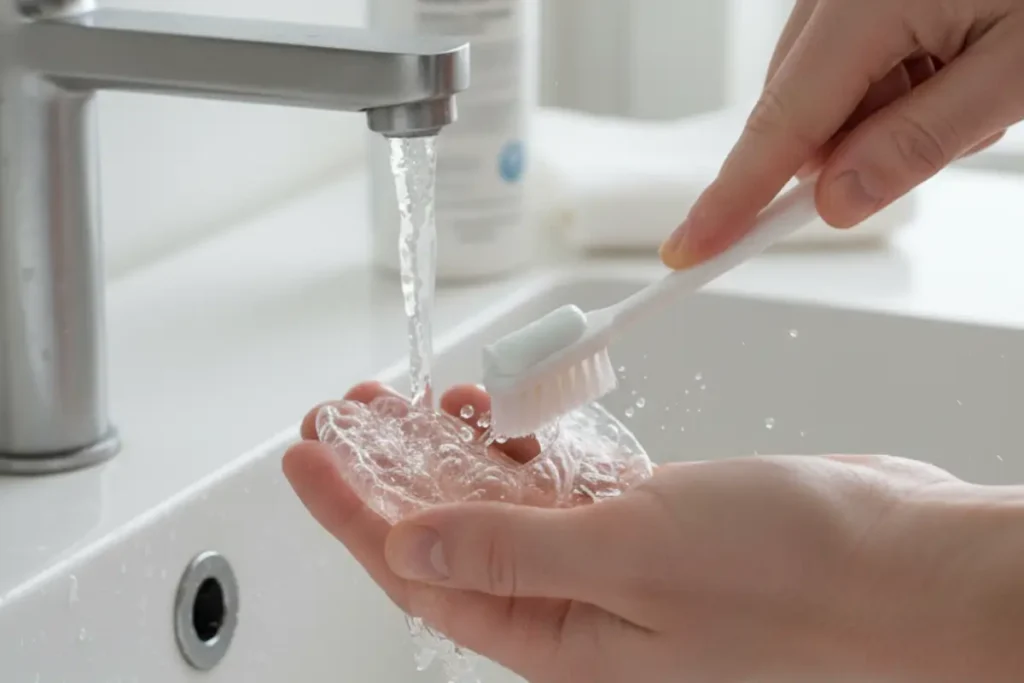
A mouthguard helps protect your teeth. You might wear it for sports, sleep, or to stop grinding your teeth at night. But if you do not clean it the right way, it can collect bacteria, smell bad, and hurt your mouth. This guide shows the safe way to clean a mouthguard and keep it fresh and safe to use.
Why Should You Clean Your Mouthguard?
Your mouthguard stays in your mouth for a long time. It touches your teeth, gums, and tongue. Germs, food bits, and saliva stick to it. If you do not clean it, it can cause problems.
If you don’t clean a mouthguard, it can:
- Cause bad breath.
- Lead to mouth sores or infections.
- Damage your teeth and gums.
- Wear out faster and stop fitting well.
How Do I Take Care of My Mouthguard to Keep It Clean?
To keep your mouthguard safe and clean, you need to care for it the right way. Follow these steps to keep it in good shape.
Rinse Your Mouthguard
Rinse your mouthguard with cool water after each time you use it. This washes off saliva and food bits before they dry. Never use hot water because it can change the shape of the guard. After rinsing, dry it well with a clean towel to stop bacteria from growing. If you need help choosing or caring for a mouthguard in Kirkland, WA,
Keep Your Mouthguard in Its Case
Always put your mouthguard in a clean case when you are not using it. Pick a case that lets air move through. This keeps it dry and stops mold and bacteria from building up. Do not store it in a bag, pocket, or tissue.
Deep Clean Your Mouthguard
You should deep clean your mouthguard once every month. This removes stains, smells, and germs that daily rinsing does not get. You can use these safe methods:
- Soak it in a mix of water and alcohol-free mouthwash for 10 minutes.
- Brush it gently with a paste made from baking soda and water.
- Use mild soap and a soft toothbrush to scrub it.

What to Use to Clean a Mouthguard?
You can clean a mouthguard using safe and simple products at home. Always choose gentle items that will not damage the surface. Avoid bleach or strong cleaners. Here are safe ways:
| Cleaning Method | How to Use It |
| Toothpaste | Use plain toothpaste (no bleach or whitening). Brush gently with a soft toothbrush. |
| Soap and Water | Use mild soap. Rub the mouthguard gently and rinse well to remove all soap. |
| Mouthwash | Use alcohol-free mouthwash. Mix with water and soak the mouthguard for 10 minutes. |
| Baking Soda | Make a paste with baking soda and water. Scrub gently to clean stains and smells. |
How Often Should I Clean My Mouthguard?
You should rinse your mouthguard every time you use it. Brushing it with toothpaste or soap two or three times a week helps keep it clean. Once a week, use baking soda or mouthwash to deep clean a mouthguard and remove germs. If you do not clean it often, it will start to smell and may not work well. Keeping a routine helps protect your mouth and keeps the guard in good condition.
Last Word
Taking care of your mouthguard is simple and important. You must rinse it after every use, clean it during the week, and deep clean it once a month. If you clean a mouthguard the right way, you protect your mouth from germs and bad smells. At Kirkland Dental Excellence, we help patients take care of their teeth and mouthguards every day, and many consider us the best dentist Kirkland.
FAQs
Can I clean my mouthguard with chemicals?
No, do not use strong chemicals like bleach or alcohol. These can damage the mouthguard and hurt your mouth.
Does the mouthguard material matter?
Yes, some guards are soft and others are hard. The type of material changes how you clean a mouthguard and how often you replace it.
What is the best way to clean a mouthguard?
Rinse it after each use, brush it with toothpaste during the week, and deep clean it once a week with baking soda or mouthwash.
How long can I soak my night guard in vinegar?
You should soak it for no more than thirty minutes. If you leave it too long, vinegar can damage the surface of the guard. Always rinse well after soaking.
When Should I Replace My Mouthguard?
You should replace your mouthguard if it feels loose, has damage, or smells bad even after cleaning.


