

Losing a tooth can make you feel shy about your smile. A common question we hear is, do dental implants change your smile? In most cases, they can. Implants fill gaps with new teeth that look like your own. They can also help protect the jawbone that supports your lips and cheeks. Your results depend on how many teeth are missing, how long they have been gone, and how healthy your gums and bone are. In this guide, Kirkland Dental Excellence explains what implants can and cannot do, and who may be a good fit.
Table of Contents
ToggleThe Impact of Missing Teeth on Your Smile and Face
When a tooth is lost, the bone that held its root no longer gets the pressure it needs from chewing. Over time, this missing teeth bone loss can make the area thinner, and in some people the lips and cheeks may start to look less full. Nearby teeth can change too. According to the American College of Prosthodontists, the teeth next to and above a gap tend to shift and tip into the empty space, which can affect your bite. A gap may also make certain words harder to say and trap food, which makes cleaning harder. Bite changes may also strain the jaw for some people.
How Do Dental Implants Help Improve My Smile?
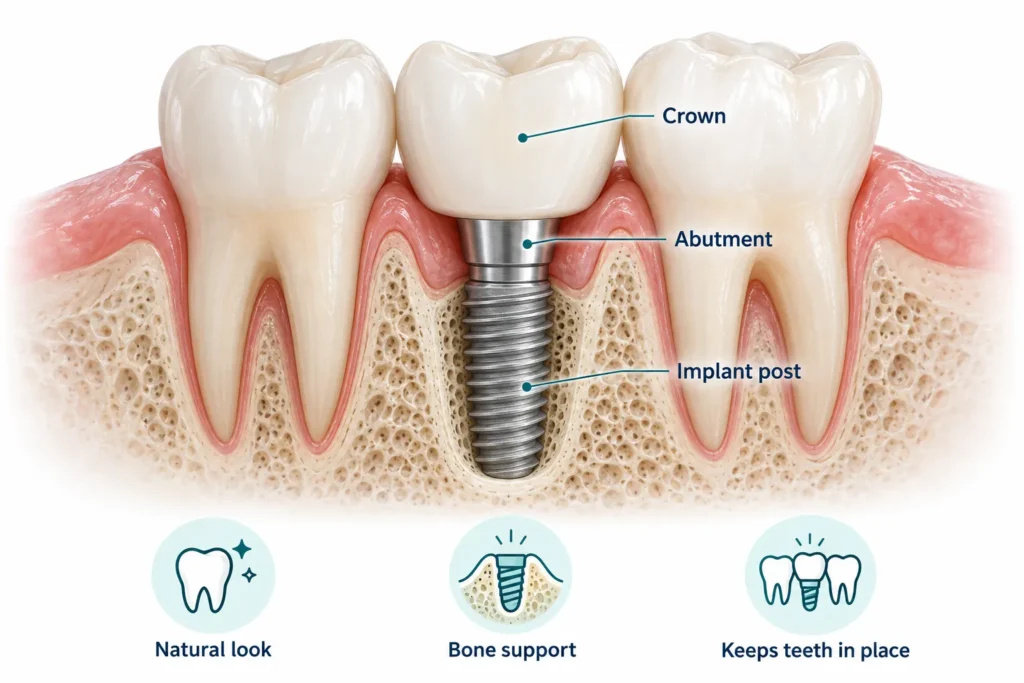
A dental implant has three parts. The implant post, usually made of titanium, sits in the jawbone and acts like a tooth root. A small connector called an abutment attaches to the post, and a crown sits on top as the part you see. Over a few months, the bone grows around the post, a process called osseointegration.
According to the American College of Prosthodontists, implant-supported teeth are designed to look, feel, and work like natural teeth. Your dentist can shape and shade the crown to match your nearby teeth and gumline. Because the implant holds the space, it also helps keep nearby teeth from drifting into the gap.
How Do Dental Implants Change Your Face Shape?
So, do dental implants change your face shape? They will not give you a new face shape, but they can help keep your face from changing. After a tooth is lost, the jawbone in that spot slowly shrinks because nothing presses on it anymore.
Over time, this can make the cheeks or lips look sunken. An implant sits in the bone like a natural tooth root, so chewing presses on the bone again. This helps the bone stay in place, which helps your face keep its shape.
Implants do not lift your face, and they cannot bring back bone that is already gone. The same is true for dental implants and your jawline. An implant protects the bone around it, but it does not change the shape of your jaw. If you have already lost some bone, you may need extra help first. According to Cleveland Clinic, a dental bone graft can add bone to the jaw and is often done before implant surgery.
How Do Dental Implants Support Your Confidence and Daily Life?
Missing teeth can make some people hide their smile or worry about eating in front of others. Implants are fixed in place, so they do not slip the way some removable dentures can. Stable, natural-looking teeth can make smiling, speaking, and eating feel easier.
Implants also offer a few benefits that are easy to overlook:
- They replace a tooth without reshaping the healthy teeth on each side.
- The implant and its crown do not get cavities, although the gums around them still need daily care.
- Several implants can hold a bridge or a full denture in place.
According to the American College of Prosthodontists, implants can support a denture that snaps into place, which helps keep it from moving and lowers the need for denture adhesive. Our guide Are Snap-On Dentures Cheaper Than Implants? compares costs.
Dental Implants vs Dentures Vs Bridges
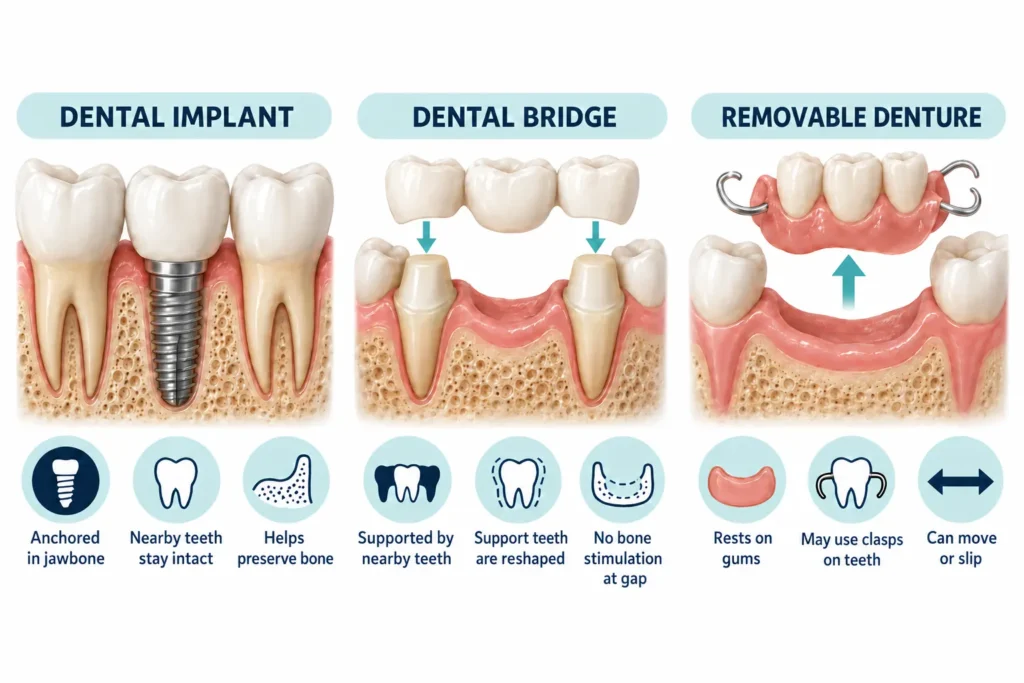
Implants are not the only way to replace missing teeth. Bridges and dentures are also common choices, and each one has its own pros and cons. A bridge is held in place by the teeth next to the gap. According to Cleveland Clinic, those teeth must be filed down to hold the bridge, and this cannot be undone. Implants do not need this, and they help protect the jawbone.
Here is a simple look at dental implants vs. dentures and bridges:
|
Factor |
Dental Implant |
Dental Bridge |
Removable Denture |
|
How it stays in place |
A post in your jawbone |
Attached to the teeth next to the gap |
Sits on your gums, sometimes with small clips |
|
Nearby teeth |
Left alone |
Filed down to hold the bridge |
Clips may rest on them |
|
Jawbone |
Helps protect the bone |
Does not protect the bone under the gap |
Does not protect the bone, which may shrink over time |
|
Stability |
Stays in place |
Stays in place |
Can move or slip |
|
Time to finish |
Several months, including healing |
A few weeks |
A few weeks |
|
How long it lasts |
Many years with good care |
About 5 to 15 years on average |
Needs refitting or replacing over time |
Are You a Good Candidate for Dental Implants?
A good dental implant candidate is usually an adult with healthy gums and enough jawbone to hold the post. Your dentist will check your teeth, gums, bone, and health history first. Things that may affect whether implants suit you include:
- Gum disease that is active or untreated
- Severe bone loss in the jaw
- A jaw that is still growing
- Diabetes that is not well managed
- Smoking or vaping, which can slow healing
According to Cleveland Clinic, implants may not be the best choice for people with some of these conditions, though every case is different. For some people, treating gum disease or adding a bone graft first may make implants possible.
Let’s Recap
When patients ask us, do dental implants change your smile, our answer is that for many people, they can. Implants fill gaps with teeth made to match your own, help keep nearby teeth in place, and help preserve the bone that supports your face. They do not lift the face or undo past bone loss, and results depend on your oral health. If you are considering dental implants in Kirkland, our team at Kirkland Dental Excellence can check your teeth, gums, and bone and talk through your options. Schedule an implant consultation or call us at (425) 827-2003.
FAQs
Yes! They help maintain your facial structure and prevent sagging, which can make you look younger.
Yes! They restore missing teeth, giving you a full, natural-looking smile.
Yes, they help preserve bone structure, keeping your jawline defined and strong.
In most cases, yes. They can restore your facial shape and prevent further bone loss.
With good brushing, flossing, and regular checkups, an implant can last many years, often for life. The crown on top may need to be replaced at some point.


