

Day 3 after immediate dentures is often one of the hardest days of healing. Swelling may be at its peak or just starting to ease, sore spots under the denture become easier to feel, and eating and talking still take effort. In most cases, these changes are a normal part of healing. In this guide, Kirkland Dental Excellence explains what to expect from the first 24 hours to three weeks, how to ease the discomfort, and which signs mean you should call us.
Table of Contents
ToggleWhat to Expect after Getting Immediate Dentures?
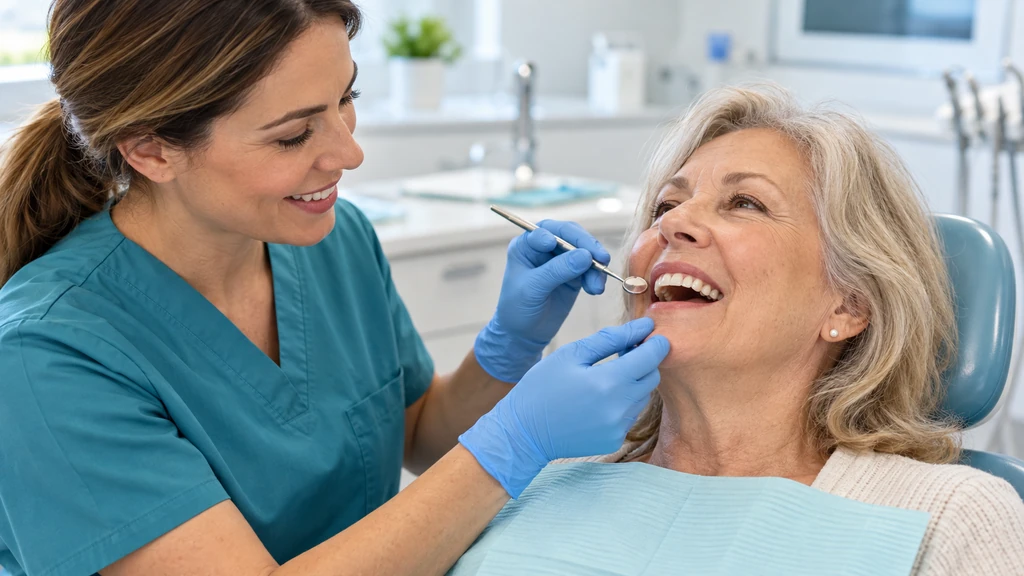
Immediate dentures are dentures your dentist places on the same day your teeth are removed, so you do not have to go without teeth while you heal. Because the denture sits right on top of fresh tooth extraction sites, some soreness, swelling, and changes in fit are expected.
According to Cleveland Clinic, immediate dentures are often a temporary step, and your dentist replaces them with final dentures once you have healed. Every mouth heals at its own pace. After a full mouth extraction with immediate dentures, swelling and soreness may feel stronger than when only a few teeth are removed. The health of your gums and bone, and your general health also play a part.
This table gives a general idea of the immediate dentures healing timeline:
Time | What Is Common | Main Focus |
Day 1 | Light bleeding, numbness wearing off, early swelling | Keep the denture in, rest, use cold packs |
Day 2 | More swelling, a tight feeling, soreness | Soft foods, salt water rinses, follow-up visit if scheduled |
Day 3 | Swelling near its peak or slowly easing, sore spots, bruising | Gentle cleaning, soft foods, calling about sore spots |
Days 4 to 6 | Swelling going down, eating and talking slowly improve | Slightly firmer soft foods, speech practice |
1 Week | The denture may start to feel loose | Follow-up visit and adjustments |
2 to 3 Weeks | Gums keep shrinking, more ease with eating | Adjustments, soft liners, planning a reline |
Day 1 after Immediate Dentures
The first day is about protecting the extraction sites. According to Delta Dental’s guide to immediate dentures, you should not remove the denture during the first 24 hours, because it acts like a bandage that helps control bleeding and swelling. On this first day, you may notice light bleeding, soreness as the numbness wears off, and swelling that starts in your cheeks or jaw. These steps can help:
- Keep the denture in, even at night, unless we tell you otherwise
- Rest with your head raised on two or three pillows
- Hold a cold pack on your cheek for about 20 minutes on and 20 minutes off
- Take your first dose of pain medicine before the numbness fully wears off, if your dentist approves it
Light bleeding can continue for two to three days. A little pink in your saliva is usually normal. Steady bleeding that keeps filling your mouth is not, and you should call us.
Day 2 after Immediate Dentures
Day 2 after immediate dentures often brings more swelling than the first day. Swelling after immediate dentures usually builds over the first two to three days before it starts to go down, so your face may look puffy and the denture may feel tight. Many dentists see patients around this time to take the denture out for the first time, check the gums, and smooth any pressure spots. If we schedule this visit for you, please keep it. After the first 24 hours, warmth tends to help more than cold.
According to Michigan Medicine, you can switch from an ice pack to a warm compress, such as a warm towel, after 24 hours, but you should never put ice or a very hot compress right on your skin. Here are a few ways to care for your mouth on day two:
- Rinse gently with warm salt water after meals (1/2 teaspoon of salt in 8 ounces of warm water)
- Eat soft foods such as yogurt, mashed potatoes, scrambled eggs, and smooth soups
- Keep resting and avoid hard exercise
Day 3 after Immediate Dentures
For many people, this is the hardest day so far. According to Cleveland Clinic, day 3 after immediate dentures is usually the worst day of pain after a tooth extraction. Feeling more sore today than yesterday does not mean something has gone wrong.
Why day 3 can feel harder
The numbness is long gone, and swelling is often at its highest point. As your gums swell and then begin to shrink, the denture presses on some places more than others. That is why sore spots from immediate dentures often show up around now. Dry socket is less common, but according to Cleveland Clinic it is most likely within the first three days, so call us if you notice severe, throbbing pain that spreads toward your ear or a bad taste that does not go away.
Eating and cleaning on Day 3 after Immediate Dentures
Stay with soft foods that need little chewing. Cut food into small pieces, chew slowly on both sides at once, and avoid biting with your front teeth. Take care with hot drinks, because the denture can make it harder to feel heat in parts of your mouth. In these first days, the denture helps your gums heal by acting like a bandage, and leaving it out for long can let your gums swell so much that it no longer fits.
Follow the removal schedule we give you. At this stage, many dentists ask patients to take the denture out a few times a day, rinse with warm salt water, brush the denture gently, and put it back in. Let the water fall out of your mouth instead of spitting.
About sore spots
If one area under the denture hurts more each day, do not wait for your next visit. Contact us so we can adjust it. A small adjustment can often make the denture more comfortable, and waiting can turn a small sore into a bigger one. This table shows what is usually normal on day three and when to call our office:
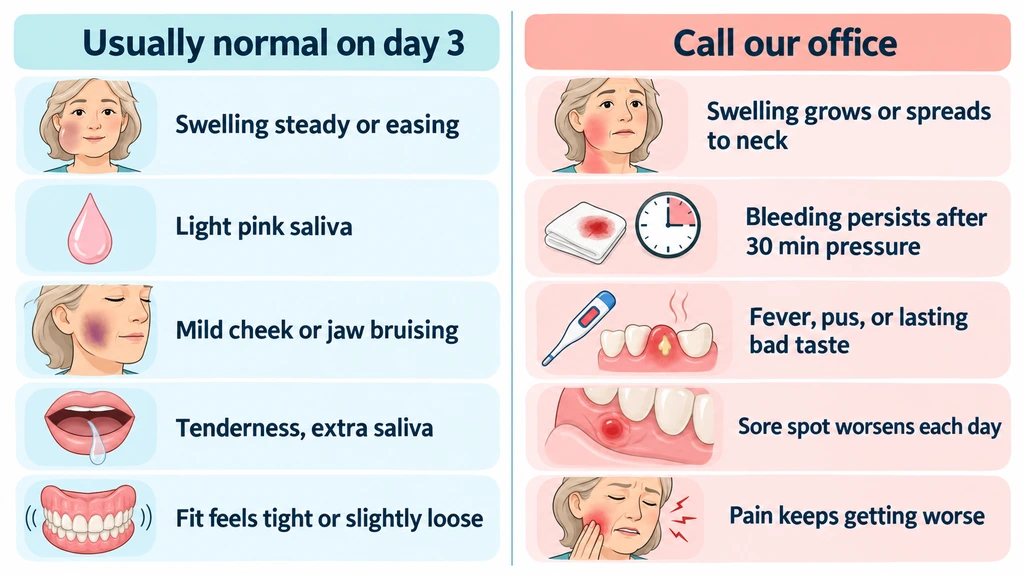
Day 4 after Immediate Dentures
By day 4 after immediate dentures, the swelling often starts to go down in a way you can see in the mirror. The denture may also begin to feel a little less strange. If soft foods have gone well, you can slowly add slightly firmer soft foods, such as tender pasta, flaky fish, or well-cooked vegetables.
According to Delta Dental’s denture guide, chewing slowly on both sides of your mouth at the same time helps keep the denture in place, while biting with your front teeth can make it tip and come loose.
When you need to bite into something, try using the corners of your mouth instead. Small habits like these make eating with immediate dentures much easier in the first weeks. Keep rinsing and cleaning after meals, and rest when your body feels tired.
Day 5 after Immediate Dentures
Many people feel more settled by day 5. Your gums may still be tender, but the discomfort is usually easier to manage than it was a couple of days ago. This is a good time to practice talking. According to Michigan Medicine, reading out loud to yourself in the first few days can help train your speech, and speech tends to improve over time. Try reading a page of a book each day, and repeat any words that feel hard to say.
Until the end of day 5 after immediate dentures, keep the denture in at all times except when you take it out to clean it. According to Michigan Medicine, after the first 5 days it is best to leave the denture out at night and let it soak in a denture cleanser, which gives your gums time to rest. Keep watching for signs of infection, such as fever, pus, or a bad taste that does not go away.
Day 6 after Immediate Dentures
On day 6, many people notice that talking and chewing take a little less effort. It will not feel like your natural teeth yet, and that is expected. You may feel ready to get back to light daily tasks. According to Cleveland Clinic, most people can return to routine activities within two to three days of a tooth extraction, but the jawbone takes several weeks to heal completely.
So even on good days, your gums and bone are still changing under the denture. Take it slowly with heavy lifting or hard workouts, and drink plenty of water to keep your mouth comfortable.
1 Week after Immediate Dentures
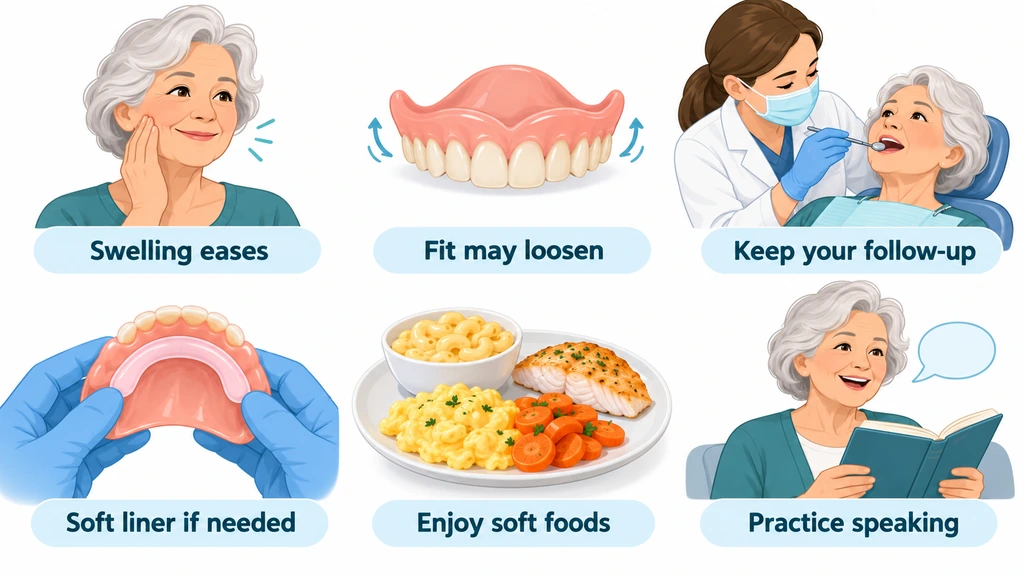
At 1 week after immediate dentures, much of the swelling is usually gone. This is often when people notice that the denture feels looser than it did on the first day. That looseness does not mean the denture was made wrong. It means your gums are healing.
According to Delta Dental’s guide, the shape of your mouth changes quickly for about a month after dental extractions, and your gums shrink as they heal. Since the denture stays the same size, the fit changes.
Your follow-up visit
Around this time, you will likely have a follow-up visit. During this visit, we may do the following:
- Check how the extraction sites are healing
- Look for pressure spots and smooth them
- Check or remove stitches that do not dissolve on their own
- Add a soft liner if the denture feels too loose
Eating and Speech 1 Week after Immediate Dentures
Many people can eat a wider range of soft foods by now, such as pasta, fish, eggs, and cooked vegetables. Tough meat, crusty bread, nuts, and sticky foods are still best saved for later. Speech is often clearer, though some words may still sound a little off.
It helps to bring a short list of questions to your visit, such as a spot that rubs or a word that is still hard to say. You can also read more about our denture care and adjustments.
2 Weeks after Immediate Dentures
At 2 weeks after immediate dentures, eating and talking often feel easier, but your gums are still shrinking. According to Cleveland Clinic, many people need several adjustments in the first couple of weeks, and getting fully used to dentures can take weeks or months.
If the denture feels loose, call us instead of trying to fix it yourself. We may suggest a denture adhesive for a short time, but use one only if we recommend it. Clean the denture every day and keep all your follow-up visits.
3 Weeks after Immediate Dentures
At 3 weeks after immediate dentures, eating and talking often feel more natural, but your gums are still healing. Here is what to expect at this stage:
- We may add a soft liner to keep the denture comfortable as your gums shrink.
- Once healing is complete, you will likely need an immediate denture reline or a new final denture.
- According to Delta Dental’s guide, most people are ready for a permanent reline about six to eight months after their extractions.
- Immediate dentures before and after photos often show the result after these later fit changes.
- If you want a steadier fit, ask us about snap-on dentures.
How to Manage Pain After Getting Dentures
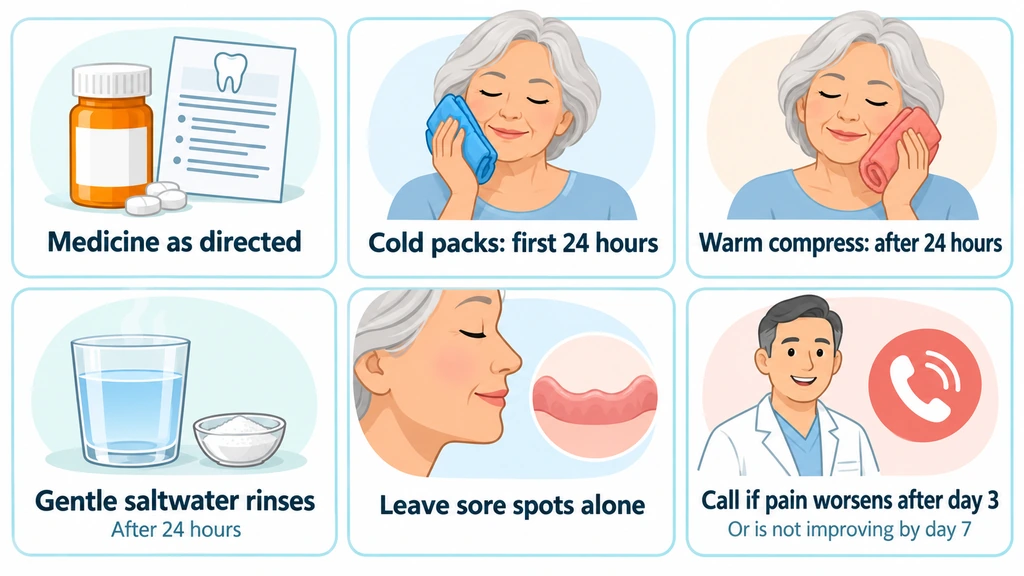
Some pain is normal after extractions and a new denture, and it should ease a little each day. According to the American Dental Association, non-opioid medicines like ibuprofen, alone or combined with acetaminophen, are recommended as the first choice for pain after tooth extractions.
These medicines are not safe for everyone, though, so take pain medicine exactly as your dentist directs and tell us about any other medicines or health conditions you have.
These steps can also help keep you more comfortable:
- Take your first dose before the numbness wears off, if your dentist approves it
- Take doses on a regular schedule for the first day or two instead of waiting for strong pain
- Use cold packs on the first day and warm compresses after that
- Rinse with warm salt water to soothe sore gums
- Keep your tongue away from sore spots and extraction sites
If your pain gets worse after day 3, or if it is not clearly better by day 7, please call us at (425) 827-2003.
Post-Operative Instructions for Immediate Denture
These immediate denture post-op instructions cover the basics for the first week. If your dentist’s written instructions say something different, follow those first.
- Take all medicines exactly as prescribed
- If bleeding starts, bite down gently and hold steady pressure instead of clenching again and again
- Rinse gently with warm salt water after meals, and let the water fall out of your mouth
- Ask us before you use any mouthwash in the first week
- Clean the denture with a soft brush and mild soap or denture cleaner, not regular toothpaste
- Do not smoke or vape while you heal
- Do not drink through a straw
- Do not bend, file, or repair the denture yourself
- Keep every follow-up visit
- Drink plenty of water and get extra rest
According to Michigan Medicine, some mouthwashes may slow healing in the first five days, so salt water rinses are the safer choice unless your dentist prescribes a rinse. The same handout warns never to adjust a denture at home, because even a small change can be costly to fix.
When to Call Your Dentist After Getting Immediate Dentures?
Most discomfort after immediate dentures fades with time. Some signs, though, need a quick check, and a few need emergency care right away. Call our office if you notice any of these signs:
- Bleeding that does not slow after 30 minutes of gentle, steady pressure
- A fever, pus, a bad smell, or a bad taste that does not go away
- Severe pain that your medicine does not help
- Swelling that gets worse after day 3 or spreads toward your neck
- A sore spot that hurts more each day
- A denture that cracks, breaks, or becomes too loose to stay in place
Call 911 or go to the nearest emergency room if you have:
- Trouble breathing or swallowing
- Swelling of the face, lips, or throat with hives or a rash, which may be a serious allergic reaction
You can reach Kirkland Dental Excellence at (425) 827-2003. We help you manage denture discomfort, improve your fit, and feel more comfortable as you heal.
Final Thoughts
Day 3 after immediate dentures can feel like a step backward, but swelling, bruising, and new sore spots at this stage are usually part of normal healing. Many people notice slow, steady progress over the next few days, while the fit keeps changing for weeks as the gums heal. Rest, soft foods, gentle rinsing, and an early call about any sore spot that gets worse can make your immediate dentures recovery easier.
If something does not feel right, or if you are thinking about immediate dentures, Dr. Hedayati and our team at Kirkland Dental Excellence are here to help. Call us at (425) 827-2003 or request an appointment at our office at 1619 Market St, Kirkland, WA 98033.
Frequently Asked Questions
What is normal on day 3 after immediate dentures?
Swelling near its peak, mild bruising, sore spots, extra saliva, and some trouble eating or talking are common. Call us for fever, pus, heavy bleeding, or worsening pain.
Can I take my immediate dentures out at night?
Not during the first 5 days. Remove it only to clean it. After day 5, leave it out at night and soak it in denture cleanser.
Why do my immediate dentures feel loose?
Your gums shrink as the extraction sites heal, but the denture stays the same size. Your dentist can add a soft liner now and a reline later.
How long until I can eat normally with immediate dentures?
Most people return to a wider range of foods over several weeks. Start with soft foods, cut food small, and add firmer foods as comfort allows.
Do immediate dentures hurt?
Some soreness is normal for the first week or two, especially around days 2 and 3. Pain should ease each day. Pain that gets worse needs a dental check.
How often should I clean immediate dentures?
Rinse the denture after meals and brush it gently at least twice a day with a soft brush and mild soap or denture cleaner, not regular toothpaste.
What comes after immediate dentures?
Once healing settles, you will likely need a permanent reline or a new final denture. Some people choose implant-supported dentures for a steadier fit.
How long should I wear immediate dentures after extraction?
Keep them in for the first 24 hours. Most people then wear them through healing for several months, until a reline or final denture is ready.


