Laser dentistry uses focused light energy to treat gums and teeth. The benefits of laser dentistry may include precise treatment, less bleeding, and faster healing for some procedures. Lasers work alongside regular dental tools, not in place of them, and your dentist decides when one fits your care. In this guide, Kirkland Dental Excellence explains the benefits of dental lasers and when they may help.
Table of Contents
ToggleHow Does Laser Dentistry Work?
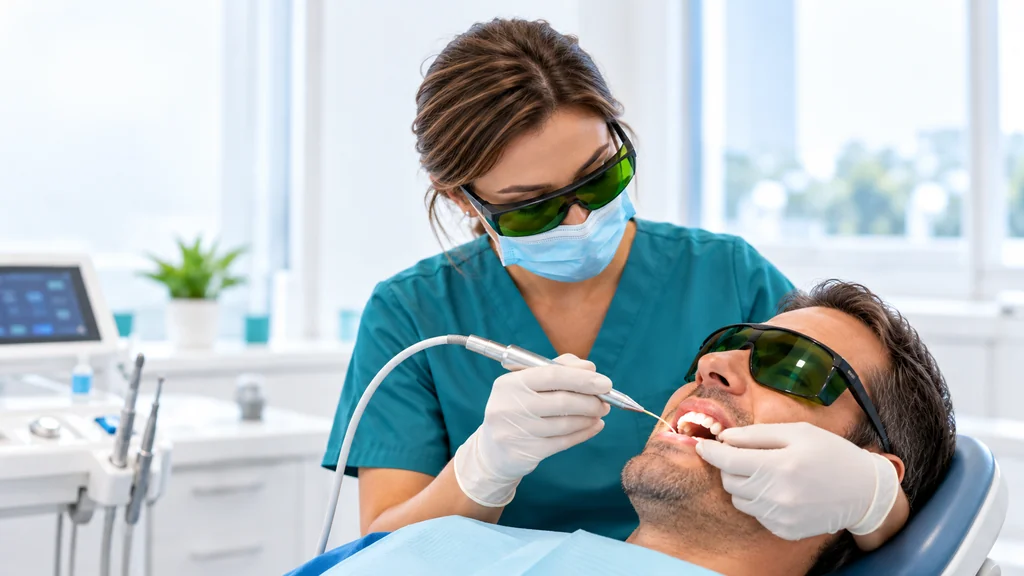
A dental laser is a pen-like tool that sends out a narrow beam of light. The light turns into heat that can cut, shape, or remove tissue. According to Cleveland Clinic, dentists have used lasers since the FDA approved them for dental care in the 1990s, and you may wear protective glasses during treatment.
Soft Tissue vs. Hard Tissue Lasers
Dentists use two main kinds of lasers, and each one is made for a different part of the mouth. Soft tissue lasers treat the gums, lips, cheeks, and tongue. Hard tissue lasers treat teeth and bone. According to the American Dental Association, dentists use each type for different procedures, as shown below:
Laser type | How it works | Common uses |
Soft tissue laser | Removes or shapes soft tissue and can reduce bacteria | Deep cleaning of the gums, gum surgery, tongue-tie or lip-tie release, taking a small tissue sample |
Hard tissue laser | Its light is absorbed by the water and minerals inside teeth and bone | Getting a tooth ready for a filling, bone surgery, root canal treatment, care around implants |
Your dentist picks the right laser for the part of your mouth that needs care.
What Are the Laser Dentistry Advantages?
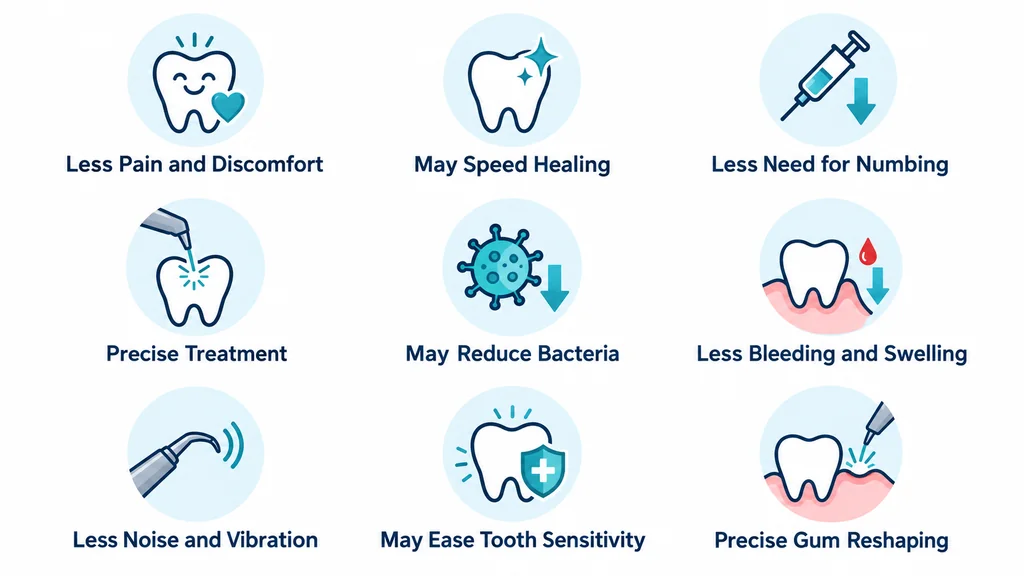
Lasers can make some dental visits easier, but the benefits depend on the procedure and the type of laser used. Most benefits show up during gum treatments, while a few also apply to cavity care and tooth sensitivity. Your dentist will still decide whether a laser is the right tool for you. Here we explain laser dentistry benefits in more detail. The information below is based on Cleveland Clinic, the Academy of Laser Dentistry, UT Health San Antonio, and published research on pain, numbing, bacteria, dental anxiety, tooth sensitivity, and gum reshaping.
Reduced Pain and Discomfort
Many patients feel less discomfort during and after some laser procedures, mostly on the gums. In research on lip frenectomy, a minor surgery on the tissue under the lip, laser patients reported less pain and less trouble speaking and chewing than scalpel patients. (National Library of Medicine)
Faster Healing and Recovery
Lasers can help small gum wounds close and heal, which may shorten recovery after some procedures. This benefit applies mainly to gum work, such as minor gum surgery or gum disease treatment, and recovery time still varies. (Academy of Laser Dentistry)
Less Need for Anesthesia
Some gum and small cavity treatments may need less numbing with a laser. In research on children, removing decay with a laser caused less pain and anxiety and reduced the need for numbing shots compared with a drill. Many treatments still use local anesthetic to keep you comfortable. (National Library of Medicine)
Precision and Accuracy
A laser beam can focus on a tiny spot, so it can remove diseased tissue while sparing nearby healthy tissue. This control helps when your dentist works near healthy gums or a tooth root. (Cleveland Clinic)
Reduced Risk of Infection
The heat from a laser may lower the number of bacteria in the treated area. Some studies found fewer bacteria in gum pockets when a laser was added to deep dental cleaning, but overall results were mixed.
Lasers do not sterilize your mouth, so daily brushing and flossing still matter for preventing plaque and gingivitis. (National Library of Medicine)
Less Bleeding, Swelling, and Fewer Stitches
During gum procedures, the laser helps seal small blood vessels as it works. This may mean less bleeding, less swelling, and fewer stitches. In frenectomy research, the laser groups needed no stitches, while the scalpel groups had some bleeding after surgery. (UT Health San Antonio)
Less Noise and Vibration
The sound and shaking of a drill make many people nervous. Lasers are quieter than a drill and cause little vibration, although they are not silent. Less vibration and pressure may help ease dental anxiety, especially in children. (National Library of Medicine)
May Relieve Tooth Sensitivity
Sensitivity often happens when tiny channels inside the tooth, called dentin tubules, are open. Laser energy can help seal these channels. Research suggests lasers can reduce sensitivity compared with no treatment, though the quality of studies varies. (National Library of Medicine)
Precise Gum Reshaping
Extra gum tissue can make teeth look short. A soft tissue laser can remove small amounts of gum to even out the gumline, often with good bleeding control. Some cases still need traditional surgery, depending on gum and bone levels. (National Library of Medicine)
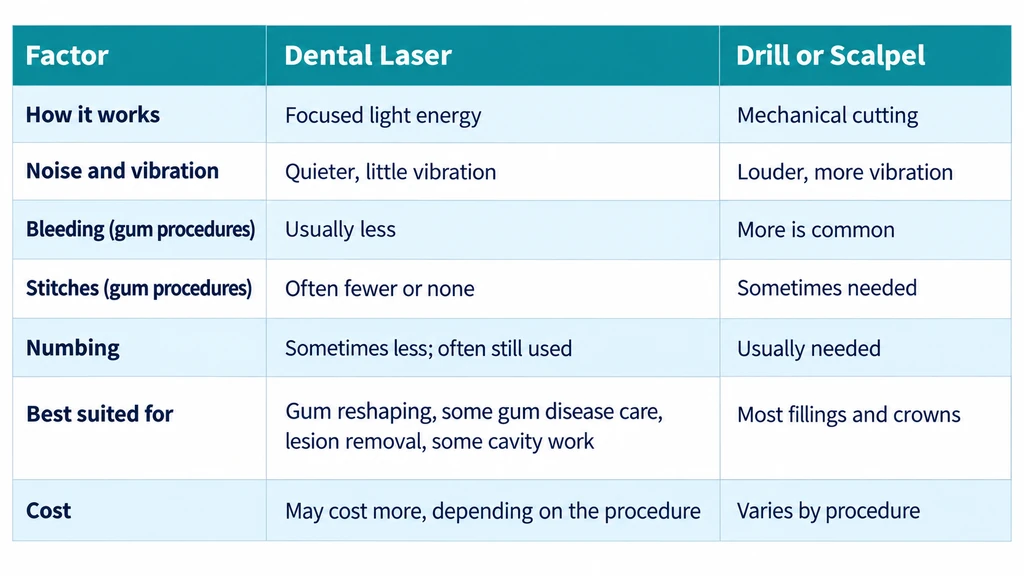
Laser vs. Traditional Dental Tools
The advantages of laser dentistry are easiest to see side by side, though Cleveland Clinic notes that most dental procedures do not require a laser.
Conclusion
Lasers can make some dental care easier, but they are not the right tool for every job. The benefits of laser dentistry show up most during gum treatments, where you may notice less bleeding and a quieter visit. For other treatments, a regular dental tool is often the better fit. At Kirkland Dental Excellence, Dr. Oveys Hedayati and our team will check your teeth and gums and tell you if a laser makes sense for you. If you have questions, schedule a consultation or call us at (425) 827-2003.
FAQs
What are the advantages of laser in dentistry?
Dentists use lasers for gum reshaping, some gum disease care, tongue-tie release, lesion removal, tooth sensitivity, and some cavity work.
What Is the Best Dentistry in Kirkland That Offers the Benefits of Laser Dentistry?
The best dentistry in Kirkland offers advanced laser treatments, skilled care, and a focus on patient comfort with modern dental technology.
Is Laser Treatment Good for Teeth?
Yes, it works well for many dental issues. It helps reduce pain and protects healthy teeth and gums during treatment.
What Is The Disadvantage of Laser in Dentistry?
Laser tools may not work on teeth with metal fillings or deep cavities. Also, not all dentists have the tools or training needed.
Why Is Laser Dentistry Better?
Laser dentistry is better because it feels gentler, heals faster, lowers infection risk, and makes visits more comfortable.
What are modern laser dentistry benefits for patients?
Modern dental lasers’ benefits may include more precise gum care, less bleeding, fewer stitches, and a quieter visit. The results depend on the procedure and the patient.


