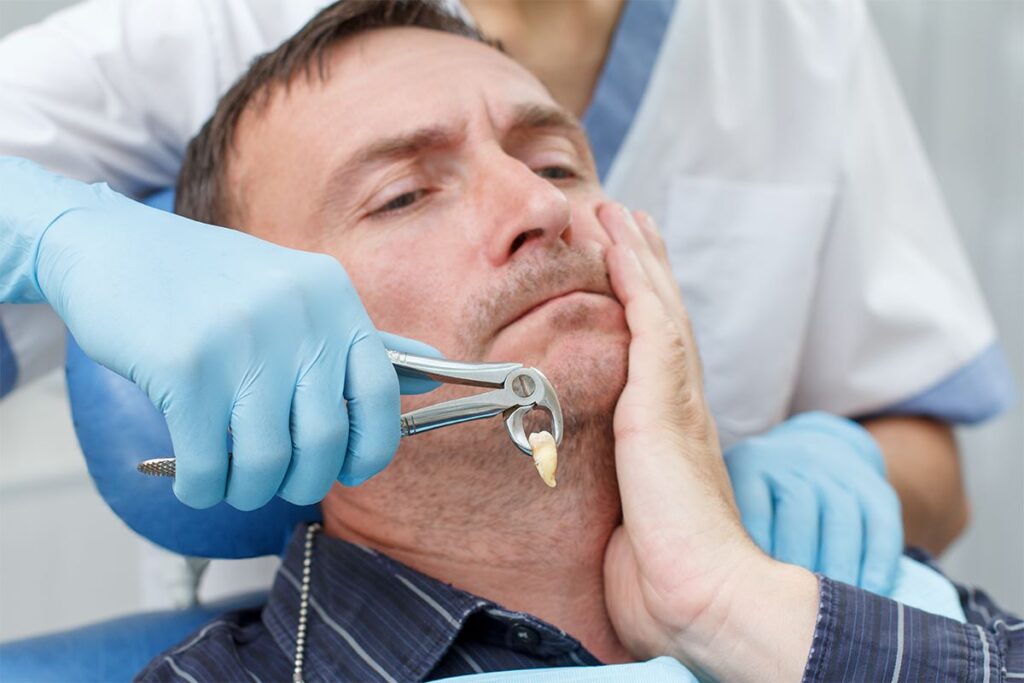
If you are a few days into your wisdom tooth extraction recovery, sore and tired, and wondering if it can get worse or what is the worst day of pain after wisdom tooth extraction?
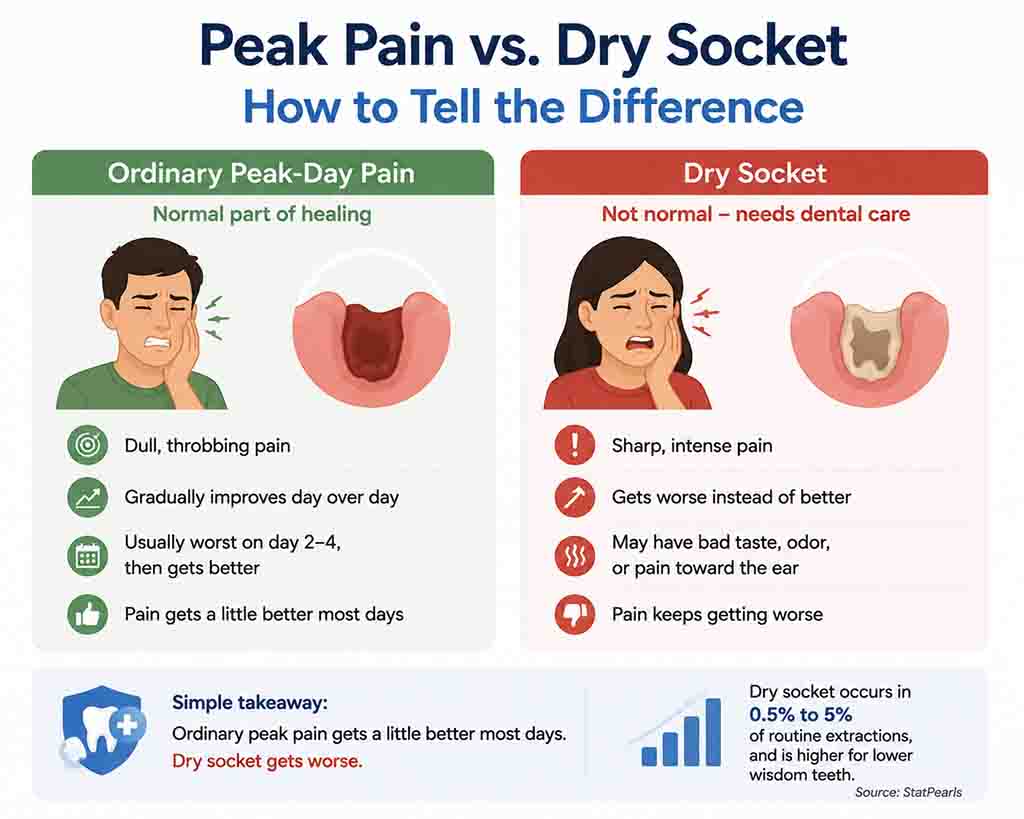
For most people, pain and swelling commonly peak between day 2 and day 4, most often on day 3, then ease steadily from there. Some soreness is expected with this surgery, and yes, wisdom tooth removal does hurt for a few days, but it usually stays manageable with the right medication and home care.
This guide covers the full timeline, why one person’s peak looks different from another’s, and how to tell ordinary peak pain apart from dry socket or infection.
Typical Days of Pain After Wisdom Tooth Extraction
Wisdom teeth removal pain and swelling follow a fairly predictable rise and fall for most people, even though the exact day it peaks can shift.
Day 0, the Day of Surgery
Numbness from the local anesthetic or sedation is still present. As it fades, most people feel dull soreness, not sharp pain. Follow the post-operative instructions your dentist gives you right after surgery: bite on gauze as directed, skip spitting and rinsing, and rest. Starting pain medication before the numbness fully wears off, if your dentist recommends it, tends to keep the first hours easier.
Days 1 to 3, When Pain Most Often Peaks
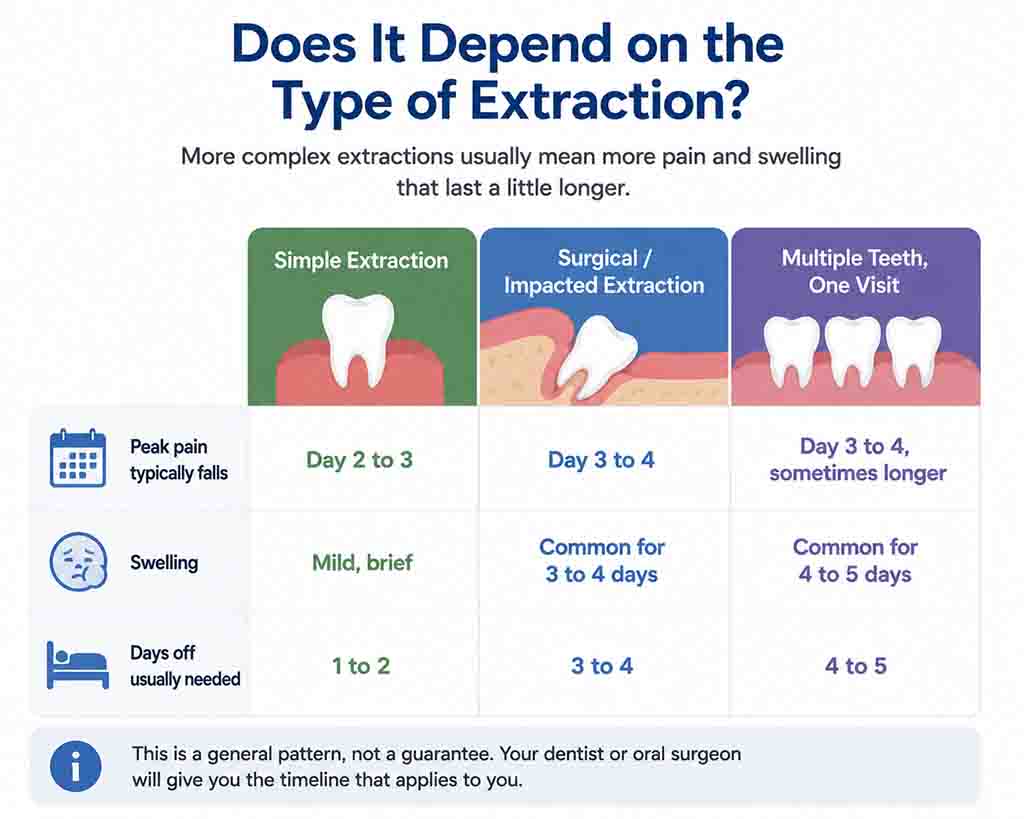
For many people, day 2 or day 3 after wisdom teeth removal is the hardest, with throbbing, tenderness, and swelling that make talking and eating harder. This is the window most people mean when they ask about the worst day after wisdom teeth removal, though it can land a day earlier or later depending on the person and the extraction. Pain at this stage is usually manageable with the medication and home care your dentist recommends.
A few other symptoms are normal here too, not just pain. Here they are:
Facial bruising can show up around day 2 or 3 and fade by day 6 or 7.
Jaw stiffness, sometimes called trismus, can make it harder to open your mouth wide at the peak.
A mild sore throat and a bit of ear discomfort are also common at this stage.
Ear pain later in recovery can signal dry socket, but in the first few days, mild ear discomfort alone is usually just normal healing, not a warning sign.
Days 4 to 7 and Beyond
Most people see clear improvement after day 3 or 4. Swelling goes down, any stitches may start dissolving, and soreness shifts from sharp to a milder ache. By about one week, most daily activities are back to normal, though the bone and gum tissue underneath keep healing for several more weeks.
By days 8 to 10, pain is usually mild to none, and the gum tissue over the extraction site keeps closing over. By day 11 to 14, normal chewing and speech usually return, even though deeper bone healing takes longer.
Pain that is still climbing rather than easing by day 4 or later is worth a call to your dentist, rather than waiting it out.
So how long does pain last after wisdom teeth removal overall? For most people, the sharpest pain lasts through the first three or four days, and lingering soreness fades gradually over the following one to two weeks.
Special Offers
Why Is Day 3 the Worst After Wisdom Teeth Removal? And Sometimes Day 4
The body’s inflammatory response usually peaks a few days after any oral surgery. Swelling and jaw stiffness build before they start to ease, and by day 2 to day 4, the numbness and adrenaline from the day of surgery have fully worn off (major clinical-institution guidance on post-extraction recovery).
That combination can make the change feel sudden rather than gradual, which is often described as the most painful day after wisdom teeth removal, even though the exact day varies by person.
For most people, the peak of recovery lands on day 3, but some people peak a day earlier or later, which is exactly why this should never be sold as one fixed rule. Day 2 to day 4 marks the toughest point in healing for most people, with day 3 the single most common day.
Common Reasons Pain Becomes Worse Than Expected
Most people’s wisdom tooth extraction pain peaks, then eases on schedule. A smaller number notice pain that worsens instead, or returns after starting to fade. Two causes explain most of these cases.
Dry socket, also called alveolar osteitis, happens when the blood clot protecting the healing bone loosens or breaks down before the site closes. It most often starts between day 1 and day 5, with day 3 the most common (StatPearls, “Alveolar Osteitis”). It causes deep, throbbing pain that can spread toward the ear. Pain that suddenly worsens after a stretch of improvement is the key signal, and it is worth a call to your surgeon rather than waiting it out.
Infection or other complications can also slow recovery. Watch for a fever, spreading redness or swelling, a bad taste or visible pus, and pain that keeps increasing instead of easing. These need prompt attention, often antibiotics or an in-office check, not just home care.
A few habits raise the risk of both dry socket and infection. Here are the ones worth avoiding:
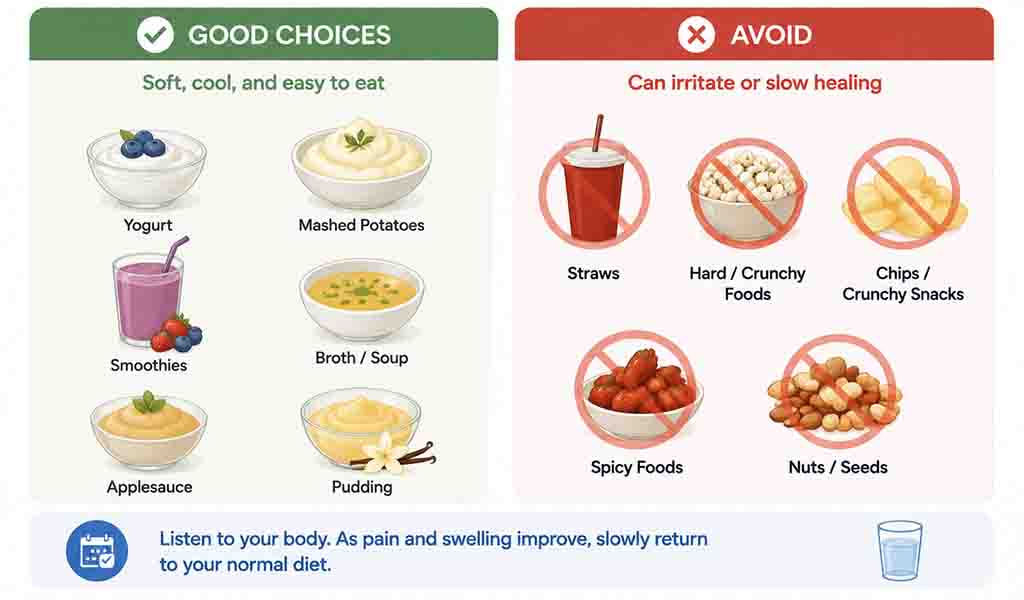
Using a straw. The suction can pull the healing blood clot loose, one of the more common ways dry socket starts.
Skipping meals. Steady, gentle nutrition supports healing; long stretches without eating do not help.
Rinsing or swishing too soon or too hard. This raises the risk of loosening the clot before the site closes.
Talking a lot or moving your jaw more than needed. Extra strain on the site can slow healing and add discomfort.
Ignoring the general recovery timeline. Knowing what to expect each day makes it easier to notice early when something feels off.
How to Manage the Worst Day of Pain After Tooth Extraction
A few simple habits make the hardest day easier to get through. Here is what helps most:
Take your pain medication on the schedule your dentist gave you, rather than waiting for pain to spike first.
Use a cold compress for the first two days, then switch to gentle warmth if swelling lingers.
Rest, and limit talking or chewing more than the healing site needs.
Stay hydrated and keep meals soft, cool, and easy to eat without effort.
Keep a follow-up call or visit on the calendar if anything feels off, rather than waiting to see if it resolves on its own.
Ibuprofen and acetaminophen, taken as directed, work best staggered or alternated, not all at once (clinical guidance on post-extraction pain management). Many people find that combination enough on its own. The first dose works best before the surgical numbness wears off. A stronger prescription pain reliever is sometimes given for more involved extractions, but it is not routine. If prescribed, use it exactly as directed, only as long as needed, and follow your surgeon’s dosing instructions; call with questions rather than adjusting doses yourself.
Ice in 15- to 20-minute intervals for the first 48 hours controls swelling; gentle warmth after that eases lingering discomfort (clinical guidance on post-extraction pain management). Elevate your head, stick to soft foods, rinse gently with warm salt water after 24 hours, and avoid smoking or straws.
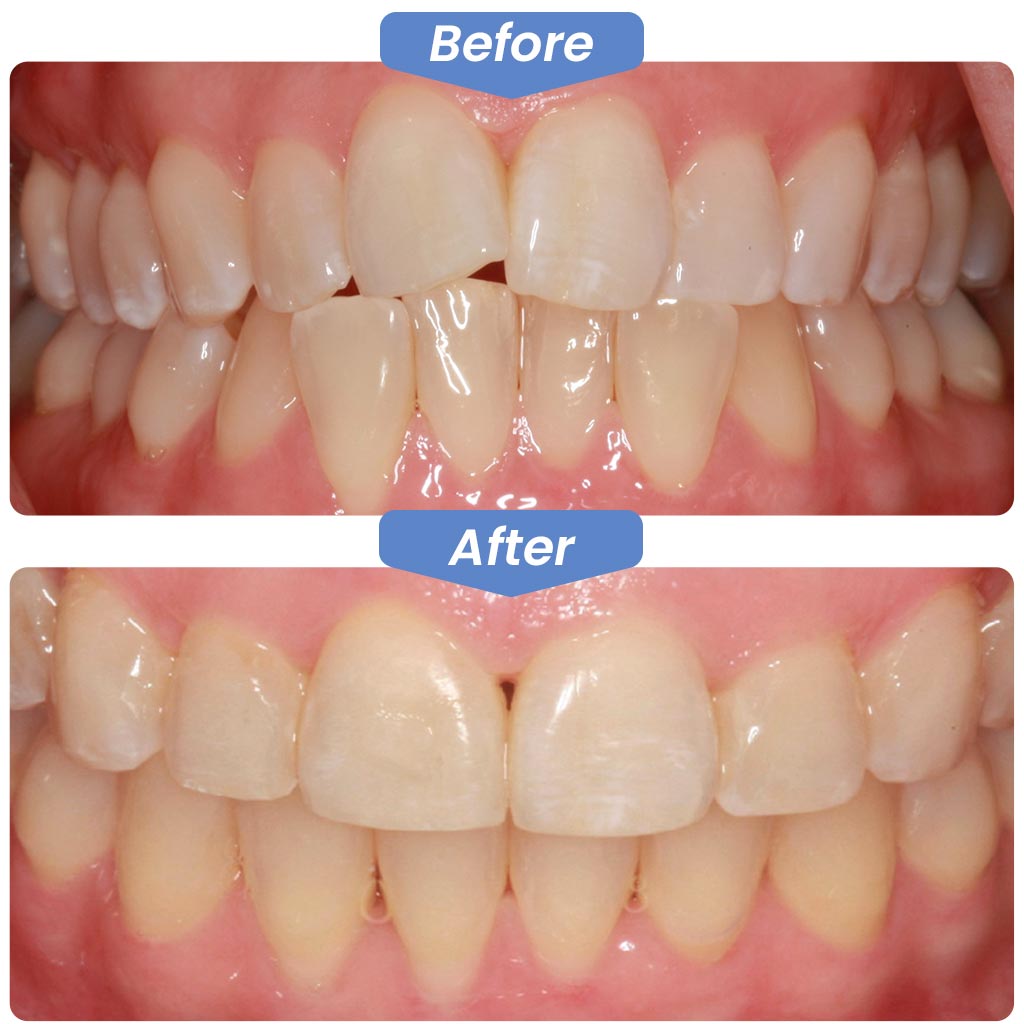
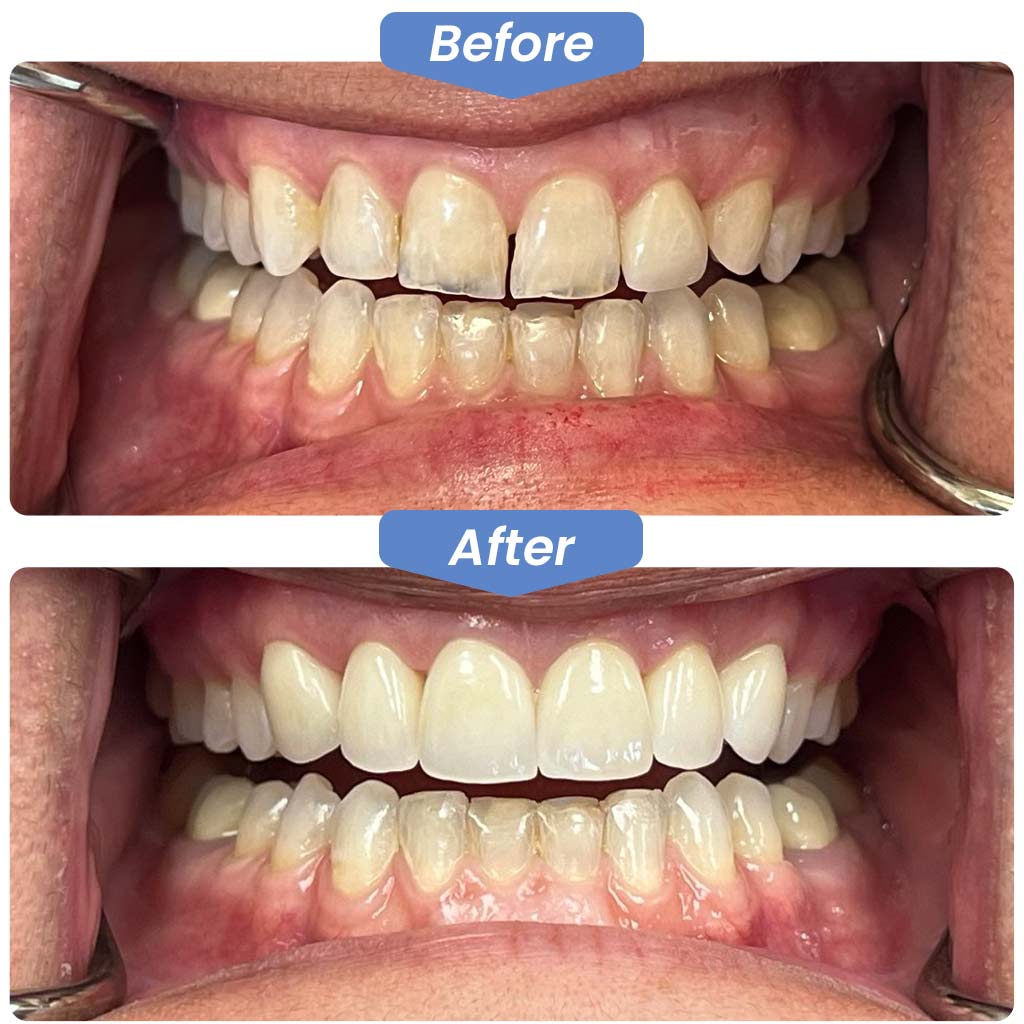
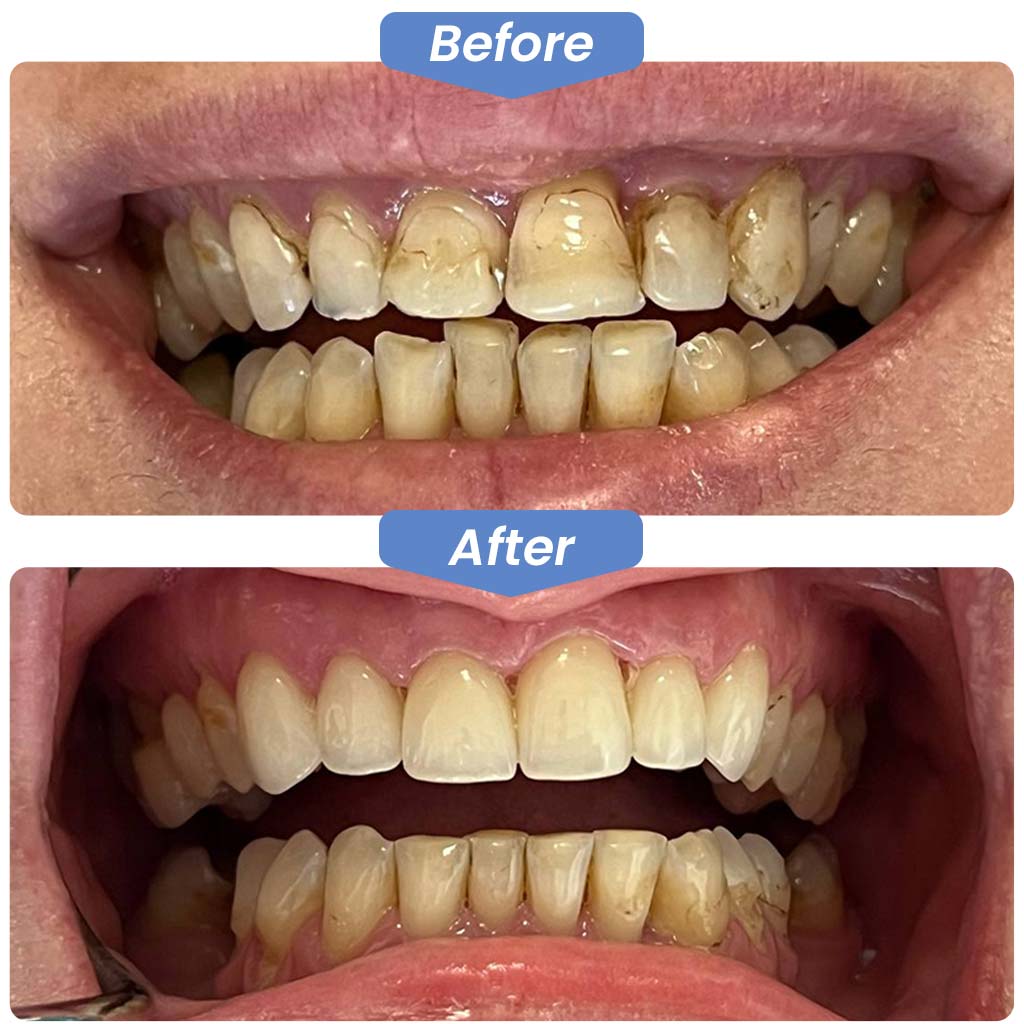
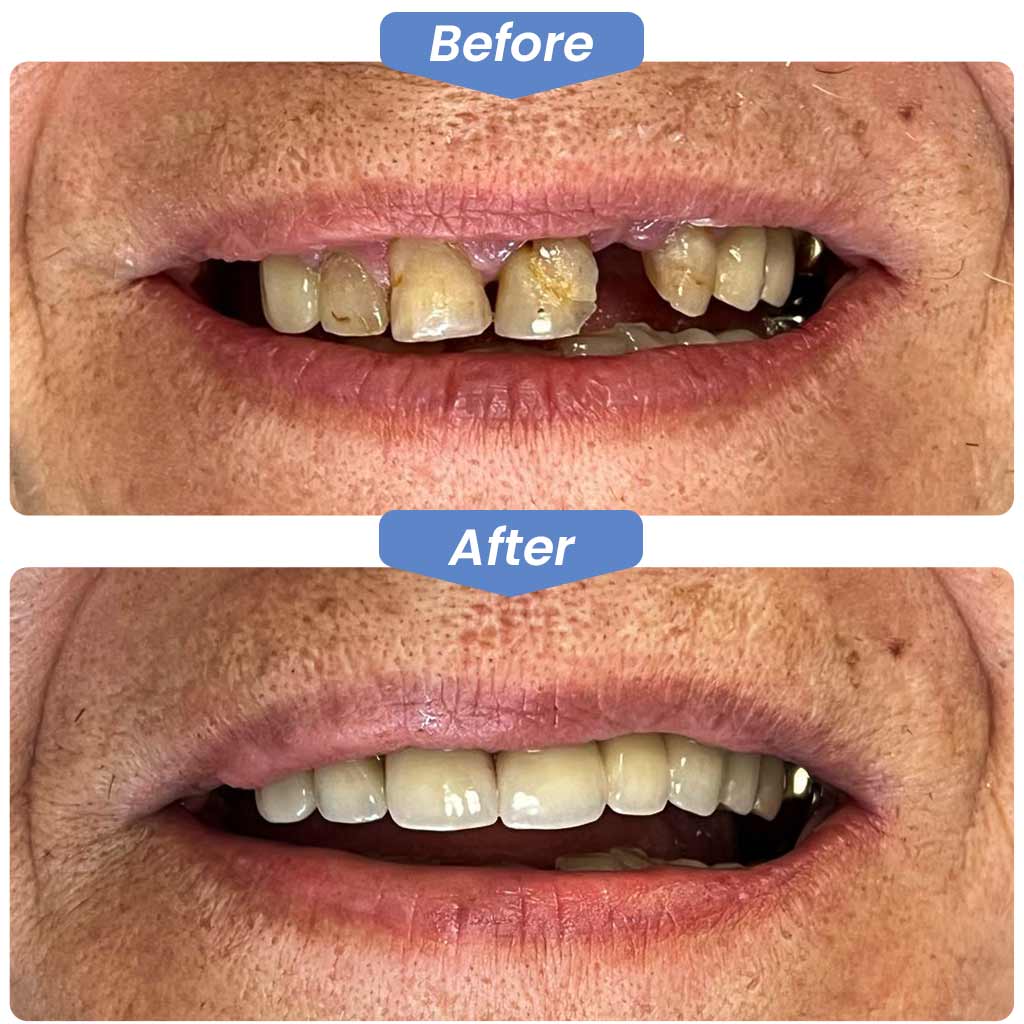
Smile Gallery
What to Eat and Avoid on the Hardest Days
For the worst day of pain after wisdom tooth extraction, you can stick to soft, cool foods and skip straws, hard foods, and spicy foods until chewing feels normal again.
So what day is the worst after wisdom teeth removal? Recovery comes down to your own body, the type of extraction you had, and how closely you follow your surgeon’s aftercare instructions. The worst day of pain after wisdom tooth extraction is never the same for everyone, and your own dentist’s instructions always come first over general guidance like this.
At Kirkland Dental Excellence, Dr. Oveys Hedayati, D.D.S., a Washington-licensed dentist with postgraduate training in restorative dentistry from UCLA School of Dentistry, and our team walk patients through exactly this kind of recovery question every week. We check how your healing is tracking, compare it against what is normal for your specific extraction, and step in with the right care, whether that means a quick phone check or a same-day visit, whenever something feels off.
Call Kirkland Dental Excellence at (425) 827-2003 to talk through your recovery, or visit us at 1619 Market St, Kirkland, WA 98033.
Mild soreness at one week can be normal while deeper tissue heals. Pain that is sharp, worsening, or paired with a bad taste or odor is worth a call to rule out dry socket or infection.
Some soreness is normal for the first few days, especially around days 2 to 4, but it is generally manageable with medication and home care, and improves steadily after that.
Dr. Hedayati is a general dentist with postgraduate education in Restorative Dentistry from the UCLA School of Dentistry. His family moved to the Seattle area from California in 2017, and he has since been serving patients in Kirkland, WA. Prior to his move, Dr. Hedayati was practicing in the UCLA Venice clinic, treating patients with extensive dental care needs. He also contributed to the clinical education of new dentists at the UCLA School of Dentistry.