
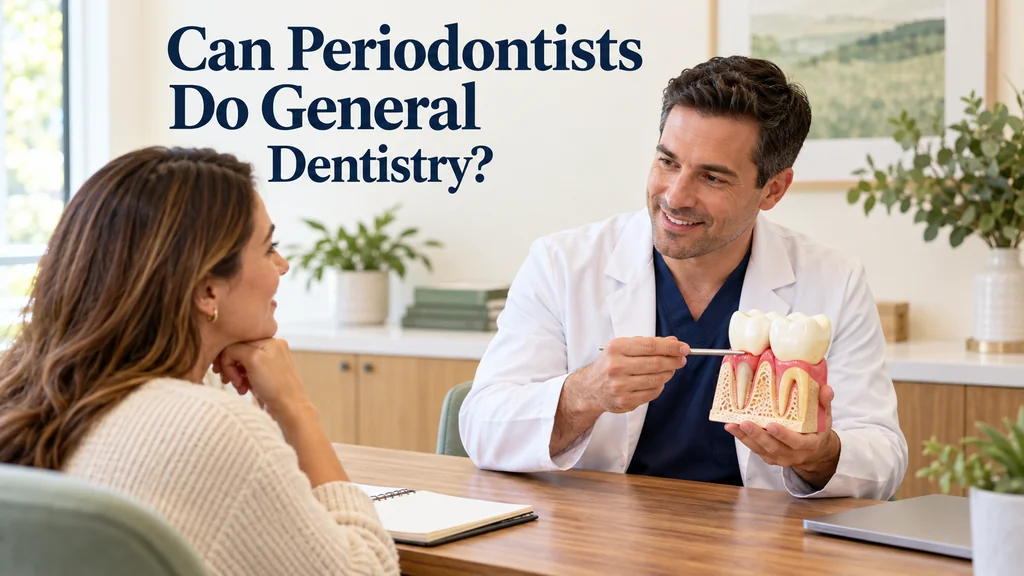
A periodontist is a dentist with extra training in the gums and the bone that hold your teeth in place. Your general dentist may refer you to one if your gums need more care. Most people still see their general dentist for checkups, cleanings, and early gum problems.
This often leads patients to one common question. Can periodontists do general dentistry? Some offer basic services like exams or fillings, but most focus on gum disease, bone loss, and dental implants. Services vary from one practice to another.
In this guide, Kirkland Dental Excellence explains how the two roles differ, which services overlap, and when a specialist visit may make sense.
Table of Contents
ToggleWhy You Might See a Periodontist
Gum health is the main focus of a periodontist’s work. Your dentist may suggest a periodontist when gum disease keeps coming back, gets worse, or needs surgery. So, what does a periodontist do in these cases?
They treat gingivitis, which is early gum inflammation, and periodontitis, a deeper infection that can damage the bone around your teeth.
According to the American Dental Association, periodontists treat cases from mild gingivitis to severe periodontitis and can perform surgery when gum disease is advanced. A referral simply means a dentist with more gum-focused training may suit that part of your care.
How Is a Periodontist Different from a Dentist?
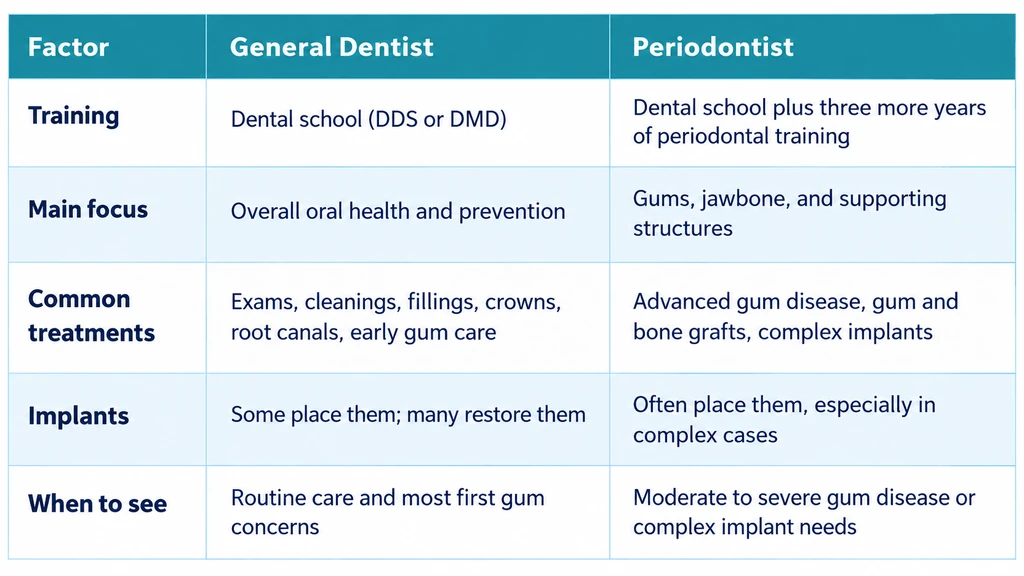
A common question is, “What does a periodontist do differently from a regular dentist?” The main difference is training and focus. According to the American Academy of Periodontology, periodontists complete three additional years of specialized training after dental school.
Here is a quick look at periodontist vs. regular dentist.
Periodontists are not the only dentists with a narrower focus. Pediatric dentists, for example, get extra training to care for children’s teeth, while family dentists treat patients of all ages. You can read more in our guide on family dentist vs. pediatric dentist.
Do Periodontists Also Perform General Dentistry?
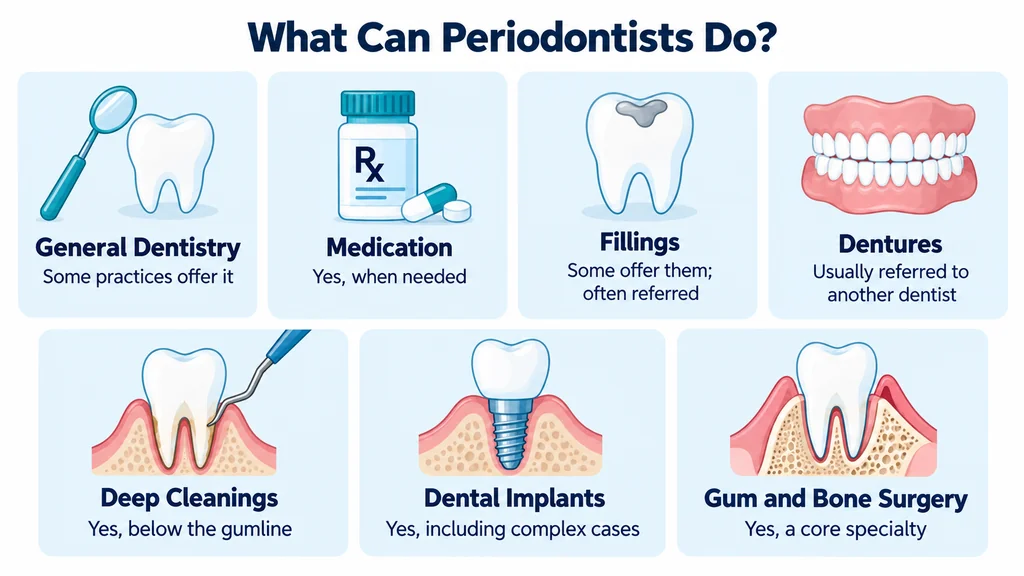
Some do, but many do not. It depends on the practice. Many periodontists focus on gum and implant care and send routine visits back to a general dentist. According to Cleveland Clinic, general dentists offer a broad range of care, from sealants to fillings and implants, while specialists help with specific needs.
Can Periodontists Prescribe Medication?
Yes. This may include antibiotics, an antimicrobial mouth rinse, or medicine placed directly in a gum pocket. According to Cleveland Clinic, a periodontist may use antibiotics alone or with other procedures and can place them in the space between the gums and teeth. Your provider will decide whether medication fits your case.
Can Periodontists Do Fillings?
Some periodontists offer fillings, but most refer them to a general dentist. According to Cleveland Clinic, a general dentist fills cavities and places crowns and bridges, while a periodontist focuses on the tissues that support the teeth.
Do Periodontists Do Dentures?
Usually not. General dentists and prosthodontists, who specialize in replacing teeth, typically make dentures. According to the American College of Prosthodontists, prosthodontists replace missing teeth with options such as complete and partial dentures, crowns, and implant-supported restorations.
A periodontist may still prepare the gums and bone or place implants that hold dentures in place.
Do Periodontists Do Cleanings?
Yes, but often a different kind. Periodontists perform scaling and root planing, a deep cleaning below the gumline that also smooths the tooth roots. According to the American Academy of Periodontology, most patients need ongoing maintenance cleanings afterward to keep their gums healthy.
General dentists also do deep cleanings, and most people get routine dental cleanings at their regular office. Some offices also use lasers for gum care, as we explain in our article on the benefits of laser dentistry.
Do Periodontists Do Implants?
Yes, many do, especially in complex cases. According to the American Academy of Periodontology, some general dentists place implants, but cases with multiple implants, limited bone, or the upper back jaw near the sinus may be referred to a periodontist.
Can Periodontists Do Oral Surgery?
Yes. Gum and bone surgery is a central part of periodontal training. According to the American Academy of Periodontology, these procedures include gum grafts, regenerative procedures that rebuild lost bone and tissue, crown lengthening, and pocket reduction.
A gum graft covers exposed roots with new tissue, while a bone graft helps rebuild bone lost to gum disease.
How General Dentists and Periodontists Work Together
Care often follows a simple path. Your general dentist spots a gum problem, then treats it or refers you. The periodontist handles the advanced treatment, and you return to your dentist for routine visits.
Some people split maintenance cleanings between both offices. According to NIH News in Health, some people with gum disease are referred to a periodontist for advanced treatment, and regular dental visits remain important.
When Should You See a Periodontist?
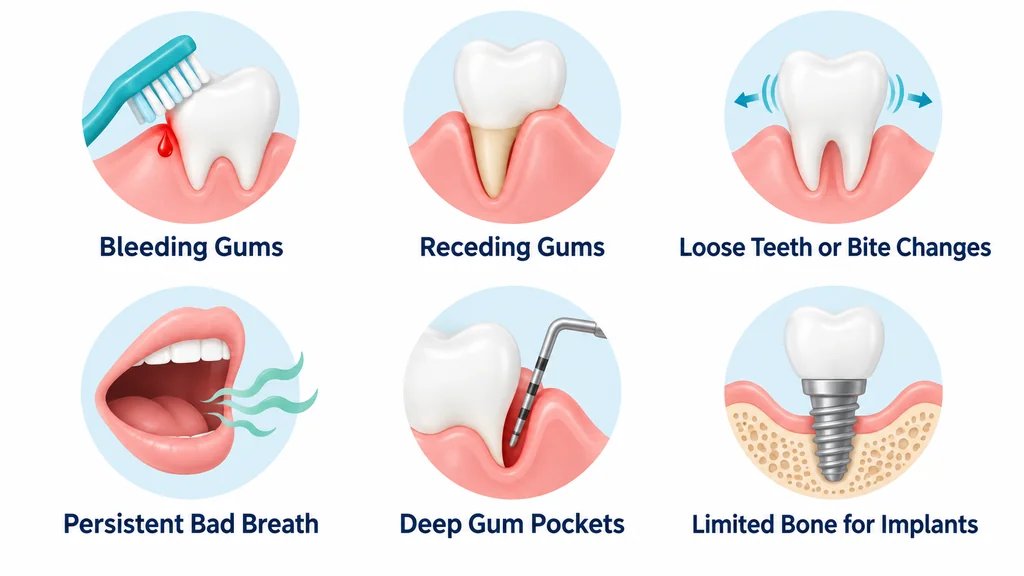
According to the National Institute of Dental and Craniofacial Research, gum disease often starts with swollen, red, and bleeding gums and can later affect the bone that supports your teeth. Signs that may call for a closer look include:
- Gums that bleed when you brush or floss
- Gums that pull back from your teeth
- Loose teeth or a change in your bite
- Bad breath that does not go away
- Deep gum pockets found during an exam
- Implant plans when bone support may be limited
A general dentist can check these signs first and suggest a periodontist if your case is moderate to severe or needs surgery.
Conclusion
Your general dentist is your home base for checkups, fillings, and early gum care. A periodontist steps in when gum disease, bone loss, or implant needs call for more focused treatment. So, can periodontists do general dentistry? Some can, but most work alongside your general dentist and share your care over time.
At Kirkland Dental Excellence, Dr. Hedayati and our team provide general dentistry and gum disease treatment for patients in Kirkland and the nearby Eastside. If you have questions about your gums, call (425) 827-2003 or schedule a gum health exam.
FAQs
Signs like swollen gums, bleeding, and receding gum lines. These symptoms often point to gum disease, which requires specialized care.
Yes, a general dentist can diagnose periodontal disease. However, they may refer you to a periodontist for advanced care if the condition worsens or becomes complex.
A regular dentist can manage mild gum disease, but a periodontist’s care is usually required for advanced periodontitis as they provide more in-depth treatment options.
Not always. Many periodontists see patients without one, but some insurance plans require a referral, so check your plan first.
Yes, in most cases. Many patients return to their general dentist for routine care, and some alternate maintenance cleanings between both offices.


