

Updated: 04/26/2026
Getting your wisdom teeth removed isn’t exactly a fun experience. After the surgery, you’ll likely have gauze in your mouth to help stop the bleeding. But knowing when to stop using gauze after wisdom tooth extraction can be confusing. Don’t worry!
Join Kirkland Dental Excellence in Kirkland, WA (rated 4.8 stars on Google) to learn when to remove gauze after tooth removal and what signs to watch for during recovery.
Table of Contents
ToggleWhen Can You Stop Using Gauze After Wisdom Tooth Extraction?
Gauze helps by putting pressure on the wound to stop bleeding. It also protects the forming blood clot from being disturbed. Using gauze right after surgery is essential for clot formation, which helps prevent dry sockets. The key is to bite down on gauze firmly but gently to maintain steady pressure on the extraction site.
But how long do you actually need to keep it in? Here’s the timeline:
Right After Surgery
When you wake up from your procedure, you’ll already have gauze in your mouth. Your normal or an emergency dentist in Kirkland, WA will have put it there to control bleeding. At this point, you’ll need to bite down on gauze gently to keep pressure on the area. This pressure helps a blood clot to form.
Keep that gauze in place for about 30 to 45 minutes. Don’t talk or chew during this time. After that, you can check the gauze. If it’s soaked with blood, swap it out for a fresh one.
First Few Hours (1 to 4 Hours)
During the first few hours, it’s normal to see some blood on the gauze. Replace it every 30 to 45 minutes as needed. When you notice the bleeding slowing down, you can start spacing out how often you replace it.
If the gauze is only lightly stained or even clean when you check it, that’s a good sign. This means the bleeding is slowing down, and you might be able to stop using gauze after wisdom tooth extraction in Kirkland soon.
Later That Day
By the end of the day, bleeding should be much less. Some people can stop using gauze after about 4 to 6 hours if the bleeding has mostly stopped. You can leave it out for a while to see if the area stays dry. If bleeding starts again, go back to using gauze.
The Next Day
By 24 hours post-surgery, most people no longer need gauze. If you wake up and find your mouth dry with no fresh blood, you’re probably in the clear. However, it’s not uncommon for bleeding to start again, especially if you’re eating or talking a lot. Keep some gauze handy, just in case.
A Few Days Later
If it’s been a few days and there’s still some minor bleeding, don’t panic. Sometimes, the clot can get disturbed by eating or brushing. As long as it’s not heavy bleeding, you can use gauze as needed. If it’s heavy or constant, call your dentist in Kirkland.

Signs to Stop Using Gauze after Wisdom Tooth Extraction
- Here are the main signs that it’s time to ditch the gauze:
- The gauze is mostly clean, with little to no blood.
- The bleeding has completely stopped or slowed to just slight oozing.
- The area feels stable, and you’re not constantly tasting blood.
- You don’t feel like you’re drooling blood anymore.
- The blood clot seems secure, and you’re not in pain.
- You can bite down without feeling fresh bleeding.
How To Use Gauze After a Tooth Extraction
First, grab a clean piece of gauze and fold it into a small, thick square. This helps the gauze soak up blood and put some gentle pressure on the spot. To make sure it doesn’t stick to the clot, dampen it a bit with some sterile water. Then, place the gauze right over where your tooth was removed, making sure it covers the area well.
Now, bite down on gauze gently but firmly. Don’t chew or move your jaw too much; just keep steady pressure on the gauze. Leave it there for about 30 to 45 minutes without fussing with it since moving it around can mess up clotting. If the bleeding keeps going, swap out the gauze for a fresh piece every half hour or so. It’s best not to leave the same one in for too long.



How Often to Change Gauze after Wisdom Tooth Extraction
Time Frame | How Often to Change Gauze |
First 30–60 minutes | Keep the first gauze pad in place; do not change it during this time. |
After 30–60 minutes | Remove the gauze and check if bleeding continues; replace with a fresh, damp gauze pad if needed. |
Every 30–45 minutes (if bleeding continues) | Change to a new gauze pad every 30–45 minutes until bleeding slows or stops. |
Once bleeding stops | Stop using gauze completely — no further replacement is necessary. |
When to Keep Gauze on After Tooth Extraction
Sometimes, you might need to keep using gauze longer than expected. Here are the situations:
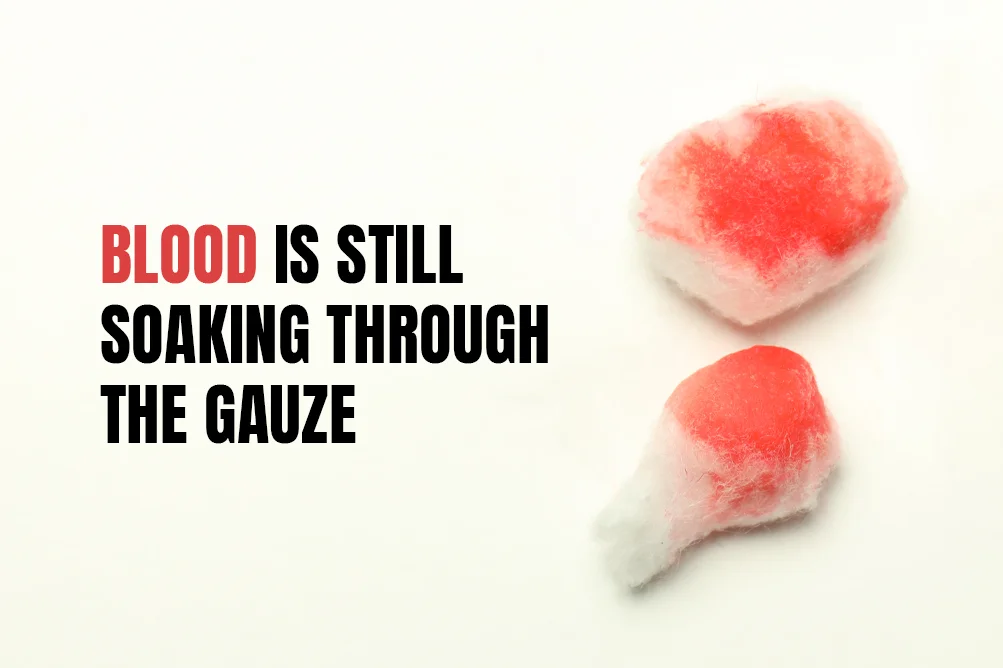
- If blood is still soaking through the gauze after 30 to 45 minutes.
- If bleeding starts again later in the day.
- If your dentist tells you to keep using gauze for a specific reason.
- If the clot comes out when you remove the gauze.
- If you’ve been moving around a lot and notice bleeding restarting.
- If you’re taking blood thinners or have a clotting disorder.
Signs to Keep Using Gauze After Extraction
- Fresh, bright red blood is on the gauze when you remove it.
- The area keeps oozing blood when you check it.
- You see that the clot has come out, and the area looks raw.
- Your mouth tastes metallic, and you feel like you’re swallowing blood.
- Pain increases when you stop using gauze.
Alternatives to Gauze After Wisdom Tooth Extraction
If you run out of gauze or need another option, there are alternatives:
- Moistened tea bags work well because the tannic acid in tea helps blood clot faster. The tea bag method is a popular home remedy. Just steep a black tea bag in hot water, let it cool, and bite down on it for 30 minutes.
- Clean, damp paper towels can work in a pinch, though they’re not as effective as gauze.
- Some dentists recommend special hemostatic gauze that promotes faster clotting.
What Happens If You Leave Gauze in Too Long?
Leaving gauze in your mouth for too long can cause several issues. A soaked or old gauze pad may stick to the forming blood clot, dislodging it when removed and potentially leading to dry socket, a painful condition that delays healing. It can also trap moisture and bacteria, increasing the risk of infection or bad odor. Always replace gauze as directed by your dentist and stop using it once the bleeding has subsided.
Let’s Recap
Learning when to stop using gauze after wisdom tooth extraction is key to healing. Usually, you can stop once the bleeding slows down, often within a few hours to a day. Most people can stop using gauze within 4 to 6 hours if they bite down on gauze properly and follow aftercare instructions.
If you’re uncertain about your healing or have any dental concerns, trust Dr. Hedayati and the team at Kirkland Dental Excellence. Known for compassionate care and modern technology, our clinic provides comprehensive dental services, from gentle extractions and restorations to smile makeovers, all focused on your comfort and confidence.
Dr. Hedayati brings years of clinical expertise and a patient‑first approach to every treatment, ensuring excellent results with genuine care.
- Visit us at 1619 Market St, Kirkland, WA 98033.
- Call us at (425) 827‑2003.
FAQs
When can I stop using gauze after wisdom tooth extraction?
Stop using gauze once bleeding has nearly stopped, usually 4–6 hours after surgery. If the pad looks clean and you’re not tasting blood, you’re done. Some people may need it up to 24 hours if bleeding persists.
How long do I need to wear gauze after wisdom teeth removal?
Use gauze for the first few hours only. Bite down for 30–45 minutes at a time, replacing as needed. Most patients can stop by the end of the first day.
Can leaving gauze in too long cause a dry socket?
Not directly, but changing or removing it too often can dislodge the healing clot. Replace gauze gently and only when necessary.
When can I stop using gauze to smoke after tooth extraction?
Avoid smoking for at least 72 hours, longer is better. Smoking greatly raises dry socket risk. Even after stopping gauze, wait several days before smoking and ask your Kirkland dentist for advice.
Can I sleep with gauze in my mouth?
No. Never sleep with gauze in your mouth, it’s a choking hazard and can interfere with healing. Remove all gauze before lying down.
What if I run out of gauze?
If bleeding hasn’t stopped and you run out, use a clean, damp tea bag or cloth briefly as a temporary fix. Then get sterile gauze from a pharmacy as soon as possible.
Can I use paper towels instead of gauze?
No. Paper towels aren’t sterile and can stick to the wound or break apart. Only use clean, medical-grade gauze or a damp tea bag if needed temporarily.